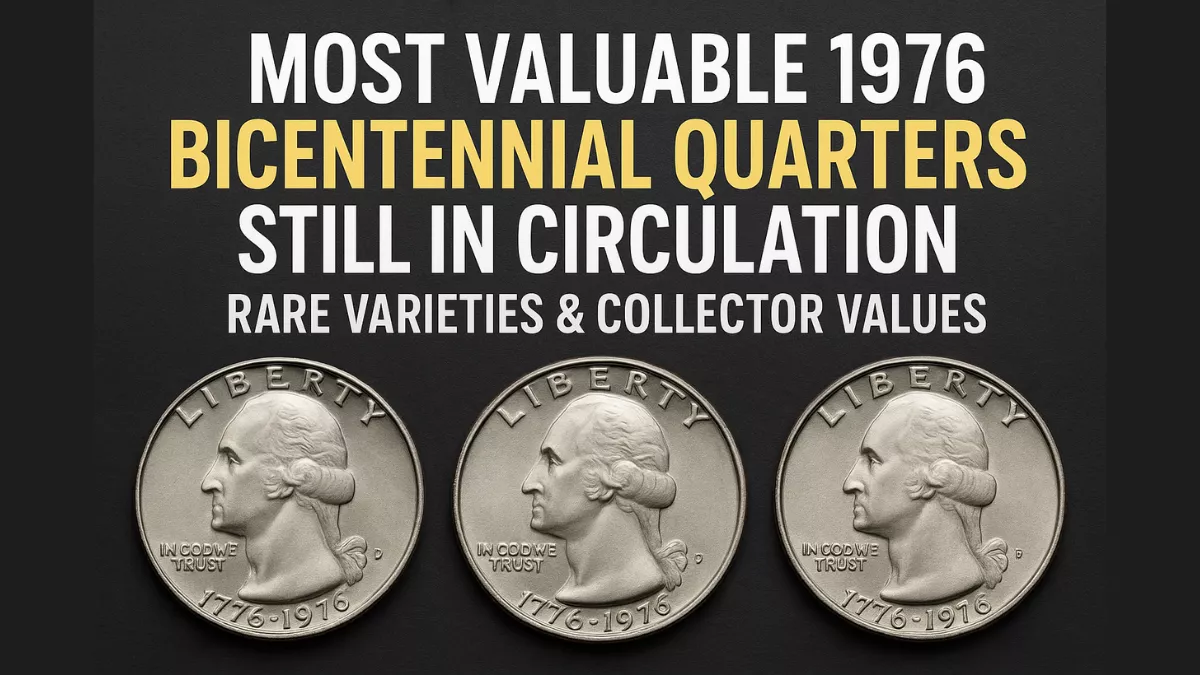
The 1976 Bicentennial quarter stands out in U.S. coin history as a symbol of American pride. Issued to commemorate the nation’s 200th anniversary, it features the unique dual date “1776-1976” and a stunning reverse design of a Colonial drummer.
While millions of these coins were minted, certain varieties and mint conditions have become highly prized by collectors today. Even quarters still in circulation can hold surprising value, making it worthwhile to understand which features make some 1976 Bicentennial quarters more valuable than others.
Why the 1976 Bicentennial Quarter is Special
The U.S. Mint produced the Bicentennial quarters with a distinctive reverse design by Jack L. Ahr. Unlike standard quarters, all 1976 quarters feature the dual date “1776-1976,” emphasizing the nation’s milestone. These coins were struck in both the traditional copper-nickel clad composition and in 40% silver for special collector sets.
Their historical significance, combined with high mintage and unique designs, makes them accessible for collectors while offering opportunities to find rare examples that are worth significantly more than face value.
Circulating Quarters That Can Be Valuable
While most 1976 quarters in circulation are worth only their face value of 25 cents, certain examples are exceptions due to rarity, errors, or condition.
Coins that were accidentally misstruck, poorly centered, or exhibit doubled dies can attract collector interest. Even a circulating quarter with sharp, well-preserved details can fetch a premium from buyers seeking high-grade pieces for their collections.
Key Rare Varieties to Look For
1. Silver-Clad Bicentennial Quarters
Special silver-clad quarters were produced for collectors in 40% silver and released in proof and uncirculated sets. While most of these remain in collections, finding one accidentally circulated can be highly valuable. Coins in pristine condition may sell for $20–$50 or more, depending on quality.
2. Doubled Die Obverse
Doubled die errors occur when a coin is struck twice, creating a noticeable doubling of design elements. On the 1976 Bicentennial quarter, look for doubling around George Washington’s hair, the motto “LIBERTY,” or the dual date. Such coins are rare and can command hundreds of dollars in the numismatic market.
3. Off-Center Strikes
Off-center strikes happen when a coin is not perfectly aligned during minting. Minor misalignments are common, but quarters missing more than 10–15% of the design are particularly valuable. Even coins missing part of the “1776-1976” date or the drummer’s image can attract collectors.
4. Planchet Errors
Planchet errors include wrong metal composition or surface flaws, such as clipped planchets, lamination issues, or cracks. For Bicentennial quarters, these errors are highly sought after because they are unintentional and unique, often selling for $50 or more depending on rarity and condition.
Grading and Condition Matter
A crucial factor in determining a coin’s value is its condition or grade. Coins are typically evaluated on a scale from Poor (P-1) to Perfect Mint State (MS-70). For circulating 1976 Bicentennial quarters, uncirculated examples with no wear, strong luster, and sharp details are significantly more valuable than worn coins. Even small differences in strike quality and eye appeal can influence price dramatically.
Tips for Collectors Seeking Valuable Bicentennial Quarters
- Examine Circulation Coins Carefully: Check for doubling, off-center strikes, or unusual surface markings. Magnification helps spot subtle errors.
- Compare with Standard Examples: Use reference images to identify minor differences in design details or mint marks.
- Preserve Condition: Avoid cleaning coins, as doing so can reduce their value. Handle them by the edges and store in protective sleeves.
- Consider Silver Varieties: Coins from proof or uncirculated silver sets can appear in circulation and often fetch higher prices.
- Consult a Professional: Certified grading services can authenticate and grade coins, boosting buyer confidence and value.
How Market Trends Affect Value
The numismatic market fluctuates based on collector demand, rarity, and historical significance. While general 1976 quarters remain common, error coins and silver varieties often see steady interest. Prices tend to rise for coins with verified grades or unique minting features.
Market timing can influence selling value, so collectors often track auctions and dealer listings to make informed decisions.
Summary
While most 1976 Bicentennial quarters are still worth just face value, rare varieties such as silver-clad coins, doubled dies, off-center strikes, and planchet errors can fetch substantial premiums. Collectors should focus on condition, design anomalies, and proper preservation techniques to maximize value.
By carefully examining circulating coins and staying informed about market trends, enthusiasts can discover hidden treasures that celebrate America’s bicentennial while potentially rewarding them financially.
FAQs
Are all 1976 Bicentennial quarters valuable?
Most are worth 25 cents, but rare errors and silver varieties can be worth significantly more.
Are off-center 1976 quarters worth money?
Yes, especially if a large portion of the design is missing, attracting collectors and premiums.