1944 Steel Penny Value
 Could a Single Penny Really Be Worth More Than $100,000?
Most people wouldn’t think twice about a one-cent coin.
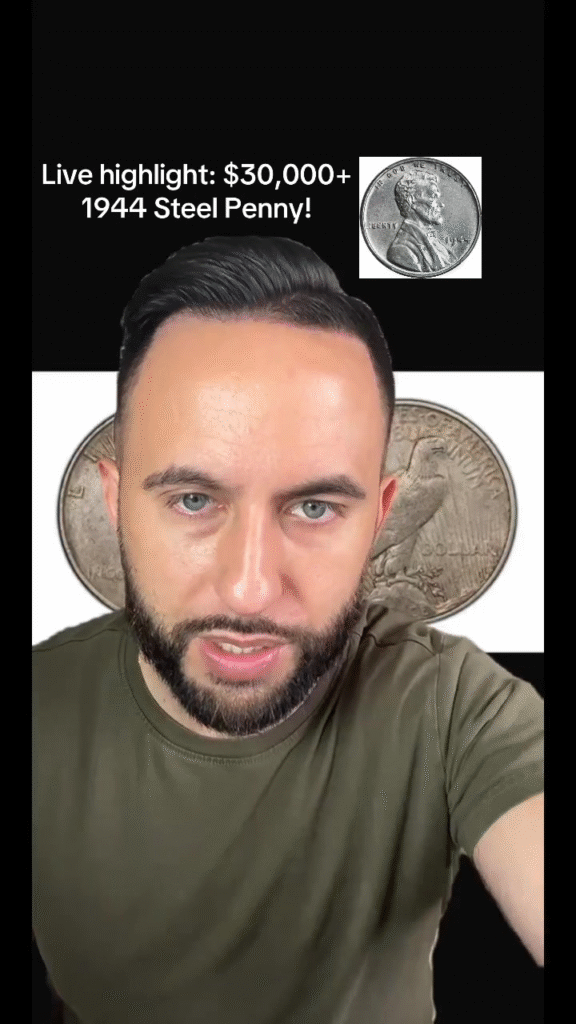
But one of the rarest and most famous U.S. Mint mistakes ever discovered is the 1944 Steel Lincoln Penny—a coin so scarce that collectors have paid well over $100,000 for authenticated examples.
What makes this penny so special?
It was never supposed to exist.
In this step-by-step guide, you’ll learn:
 Why the 1944 Steel Penny was accidentally created
How much it could be worth today
How to identify a genuine example
Common counterfeits to avoid
What to do if you think you’ve found one
Let’s take a closer look at one of America’s most legendary coin errors.
 What Is a 1944 Steel Penny?
The 1944 Steel Penny is one of the most famous mint error coins in U.S. history.
During World War II, copper was needed for military equipment and ammunition. To conserve copper, the U.S. Mint produced Lincoln cents in 1943 using zinc-coated steel instead of the traditional bronze alloy.
Wartime Penny Production
 1943: Steel pennies produced
1944: Mint returned to copper cents
However, a small number of leftover steel blanks from 1943 remained inside minting equipment and were accidentally struck with the 1944 date.
The result?
 One of the rarest Lincoln cents ever created.
Because only a tiny number are known to exist, collectors consider them true numismatic treasures.
 1944 Steel Penny Value Guide
The value of a 1944 Steel Penny depends heavily on condition, authenticity, and certification.
| Condition | Estimated Value |
|---|---|
| Circulated Example | $20,000 – $50,000+ |
| Mint State Example | $50,000 – $100,000+ |
| Premium Certified Coin | $100,000+ |
| Record Auction Results | $115,000+ |
Why Is It Worth So Much?
 Extremely rare mint error
 Important World War II history
 Very few confirmed examples
 Strong demand from collectors
 The combination of rarity and historical significance makes this coin one of the most desirable Lincoln cents ever produced.
 How to Identify a Genuine 1944 Steel Penny
Think you’ve found one?
Follow these simple tests before getting too excited.
Step 1: Perform the Magnet Test
This is often the quickest and easiest check.
Genuine Steel Penny
 Sticks strongly to a magnet
Regular Copper Penny
 Does not stick
If your 1944 penny is magnetic, it deserves further investigation.
Step 2: Check the Weight
A genuine steel cent should weigh approximately:
 2.7 grams
Use a digital scale accurate to at least 0.01 grams.
Typical Weights
- Steel Penny: ~2.7 grams
- Copper Penny: ~3.11 grams
Even a small difference can be important.
Step 3: Inspect the Date Carefully
The date should clearly read:
1944
Because of the coin’s high value, many counterfeits are created by altering dates.
Warning Signs
 Scratched numbers
Unnatural-looking digits
Signs of tooling around the date
If the date appears suspicious, professional authentication is essential.
Step 4: Examine the Color
Color can provide another important clue.
Genuine 1944 Steel Penny
 Silver-gray appearance
 Similar to a 1943 steel cent
Normal 1944 Penny
 Reddish-brown copper color
A silver-colored 1944 penny deserves closer inspection.
 Common 1944 Steel Penny Counterfeits
Because authentic examples are worth so much money, fake coins are common.
Understanding common scams can save collectors from expensive mistakes.
Fake Type #1: Plated Copper Pennies
Some counterfeiters coat ordinary copper pennies with silver-colored plating.
Fake Type #2: Altered Dates
Scammers sometimes modify a 1943 steel penny to resemble a 1944.
Fake Type #3: Novelty Replicas
Some replicas are sold as souvenirs but later enter the marketplace as “rare coins.”
Always verify authenticity before buying or selling.
Professional Authentication Is Essential
If your coin passes the basic tests, the next step is professional grading.
The two most trusted grading services are:
 PCGS
PCGS
Professional Coin Grading Service
NGC
Numismatic Guaranty Company
Benefits of certification include:
Authentication
Accurate grading
Increased buyer confidence
Higher market value
Certified examples typically sell for significantly more than uncertified coins.
 How to Protect a Potentially Valuable Penny
If you think you’ve found a rare coin:
Do This Immediately
 Handle the coin only by its edges
 Place it in a protective holder
 Avoid cleaning or polishing
 Store it in a dry environment
 Submit it for authentication
Never Do This
Clean the coin
Polish the surface
Use abrasive chemicals
Rub away discoloration
Cleaning can dramatically reduce collector value.
 Why Collectors Love the 1944 Steel Penny
The 1944 Steel Penny combines everything collectors want:
Historical importance
Famous mint error
Extreme rarity
Strong investment potential
Continuous collector demand
Few U.S. coins have achieved the same legendary status.
Final Thoughts
The 1944 Steel Penny is far more than a one-cent coin.
It’s one of the most famous mint errors ever produced by the U.S. Mint and remains a dream coin for collectors worldwide.
Before spending an old penny, take a closer look.
You might be holding:
A legendary rarity
A piece of World War II history
A coin worth over $100,000
Sometimes the most valuable treasures come in the smallest packages.
Happy coin hunting!