$10,000+ Eisenhower Dollars?
Most people treat Eisenhower dollars like oversized pocket change.
Serious collectors do not.
They understand that condition, strike quality, and certified grade — not hype — determine whether an Eisenhower dollar stays common… or quietly reaches $7,000 to $10,000+ at auction.
Two coins from the same year can look identical.
Yet one earns strong collector demand — while the other never moves beyond face value.
Here’s why.
 Understanding the Series: Why Eisenhower Dollars Behave Differently
The Eisenhower dollar was issued from 1971–1978. These large copper-nickel clad coins were produced in high numbers, leading many people to assume they lack value.
But collectors evaluate them differently.
They focus on:
- Surface preservation
- Original mint luster
- Strike sharpness
- Certified grade rarity
- Proven auction history
Age alone does not create value in this series.
Condition replaces age as the deciding factor.

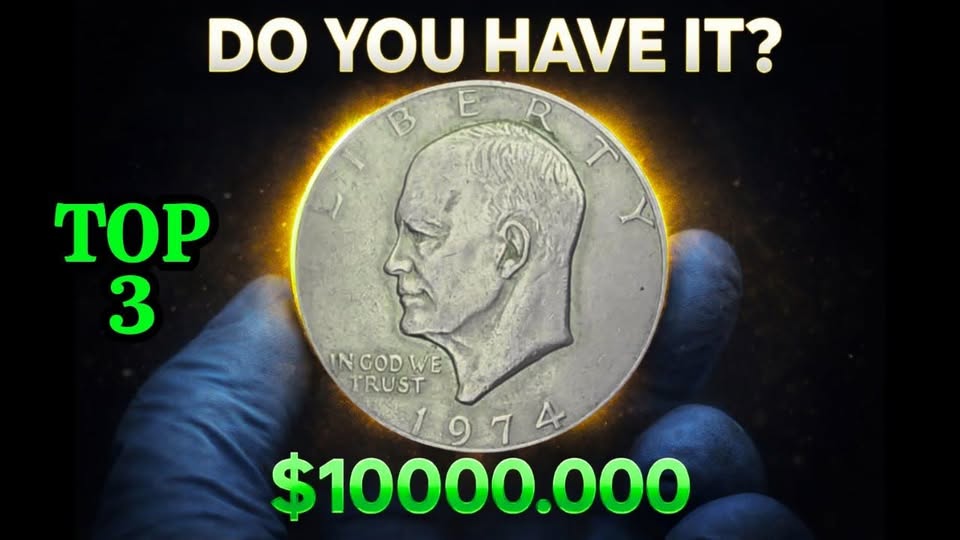
 1974 Eisenhower Dollar (No Mint Mark) — Up to $9,500+
 Why It’s Often Misunderstood
The 1974 Eisenhower dollar was produced in Philadelphia and released into circulation in large numbers.
Because it is common in worn condition, most people dismiss it.
That is the mistake.
 Step 1: Confirm No Mint Mark
If there is no mint mark, the coin was struck in Philadelphia.
This is normal for 1974 circulation issues.
 Step 2: Examine Surface Preservation
Eisenhower dollars are large and heavy.
They were stored in mint bags, causing:
- Contact marks
- Surface friction
- Bag abrasions
Truly clean examples with:
- Smooth fields
- Minimal distractions
- Strong original luster
Are far scarcer than mintage numbers suggest.
 Step 3: Understand Grade Separation
The difference between an average Mint State coin and an elite certified example is dramatic.
Verified auction results show:
- One top-grade example sold for approximately $9,500
- Another elite specimen realized around $7,000
Extreme high estimates for near-perfect survivors exceed $10,000, but these represent the very top of the condition spectrum.
 Worn or heavily marked examples typically remain common.

 1971-D Eisenhower Dollar — First-Year Prestige Reaching $10,000+
The 1971-D Eisenhower dollar carries special historical weight.
It represents the first Denver Mint issue of the Eisenhower series.
Collectors treat first-year coins differently.
Why First-Year Coins Matter
First-year issues:
- Anchor the series
- Establish strike standards
- Hold long-term collector relevance
But again — condition determines value.
 Step 1: Check the “D” Mint Mark
Look for a small “D” on the obverse near the date.
 Step 2: Evaluate Strike Strength
Denver Mint examples often show:
- Variable hair detail
- Soft reverse features
- Uneven luster
Coins with bold strike and clean fields stand apart.
 Verified Auction Range
- Top certified example: approximately $10,000
- Another elite piece: around $7,500
- Extreme high estimate: $12,000+ for nearly flawless preservation
Circulated coins, however, generally carry minimal premium.

 1972-D Eisenhower Dollar — The Quiet $8,000 Surprise
The 1972-D Eisenhower dollar is one of the most misunderstood dates in the series.
Large mintage numbers create the illusion of stability.
But the market behaves selectively.
Why This Coin Divides Collectors
Many 1972-D examples show:
- Muted luster
- Surface disturbances
- Uneven strikes
That means visually strong coins are harder to find than expected.
Step 1: Inspect Eye Appeal
Collectors pay attention to:
- Balanced surfaces
- Strong hair detail
- Clean reverse fields
- Natural luster
Coins that meet these standards quietly separate from the rest.
Verified Market Results
- Elite example sold for approximately $8,000
- Another top specimen achieved around $6,500
- Extreme high estimate: $10,000+ for near-perfect examples
Most examples remain affordable.
Only the best survive into the premium tier.
 The Reality Check Every Collector Needs
Eisenhower dollars are not automatically valuable because:
- They are large
- They are old
- They are discontinued
They become valuable only when:
 Condition is exceptional
Surfaces are original
Strike is strong
Certified grade is elite
Market demand aligns
That alignment is rare.
Where True Value Emerges
The real lesson is simple:
Mintage numbers create quantity.
Condition creates scarcity.
The difference between an ordinary Eisenhower dollar and a four-figure auction result is rarely dramatic — but it is always measurable.
Before assuming your coin is valuable:
- Examine the luster carefully
- Check for surface marks
- Evaluate strike sharpness
- Consider professional grading
Because in this series…
Preservation quietly decides everything.