Currency collecting has always intrigued historians, investors, and hobbyists alike. While coins often steal the spotlight, paper money carries its own hidden treasures. A simple $1 bill tucked in your wallet could hold extraordinary value if it carries unique features, printing errors, or rare serial numbers. Collectors are constantly searching for these anomalies, and the market for rare bills continues to grow.
Why Some $1 Bills Are Worth More Than Face Value
The value of a $1 bill goes beyond its printed denomination when it possesses characteristics that make it scarce. Collectors prize bills that are difficult to find, and rarity drives demand. A bill with a printing mistake, unusual serial number, or historical significance can fetch thousands of dollars at auctions or private sales.
Key Features That Increase Value
Several factors determine whether a $1 bill is collectible. These include:
- Printing errors such as misaligned seals or inverted serial numbers
- Star notes, which replace damaged bills during production
- Unique serial numbers like repeating digits or palindromes
- Historical series tied to specific years or events
Each of these features adds a layer of rarity, making the bill more desirable to collectors.
Understanding Star Notes
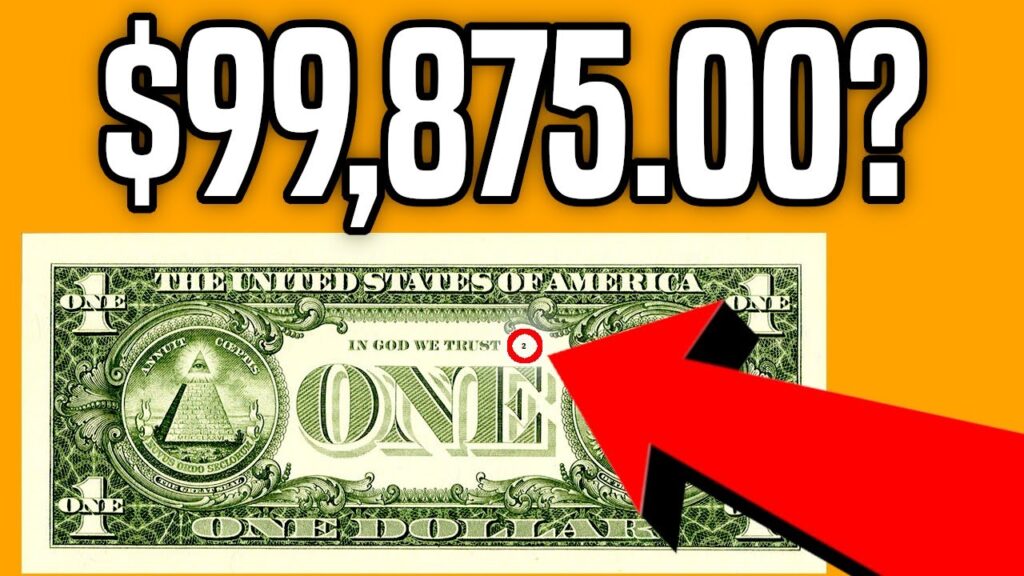
Star notes are among the most sought-after $1 bills. These notes are printed to replace defective bills and are marked with a small star next to the serial number. Because fewer star notes are produced compared to regular bills, they are considered rare. Depending on the condition and series, a star note can be worth significantly more than its face value.
The Role of Serial Numbers
Serial numbers are a major factor in determining value. Collectors look for patterns that stand out, such as:
- Low numbers (e.g., 00000001)
- High numbers (e.g., 99999999)
- Repeating sequences (e.g., 12121212)
- Palindromes (e.g., 12344321)
- Solid numbers (e.g., 77777777)
Bills with these serial numbers are rare and often command high prices.
Printing Errors That Add Value
Printing errors are another category that excites collectors. Mistakes during production can result in bills with missing seals, misaligned printing, or even double impressions. These errors are rare because most defective bills are caught before circulation. When they slip through, they become highly valuable.
Historical Significance of Certain Series
Beyond errors and serial numbers, the year and series of a $1 bill can also influence its value. Bills from certain periods, especially those tied to major historical events, are more collectible. For example, notes from the early 20th century or those with unique design changes often attract attention.
Condition Matters
The condition of a bill plays a crucial role in its value. Collectors grade bills based on wear, folds, and overall appearance. A pristine bill with sharp edges and no creases is worth far more than one that is worn or damaged.
Grading Scale for Paper Money
| Grade | Description | Value Impact |
|---|---|---|
| Uncirculated | Crisp, no folds or wear | Highest value |
| Extremely Fine | Minor handling, slight folds | High value |
| Very Fine | Light wear, some folds | Moderate value |
| Fine | Noticeable wear, multiple folds | Lower value |
| Good | Heavy wear, tears, stains | Minimal value |
Examples of Bills That Sold for Thousands
Collectors have paid thousands for rare $1 bills. For instance, a bill with a unique serial number like 00000001 or a dramatic printing error can sell for several thousand dollars. Star notes in pristine condition have also fetched impressive sums.
How to Check Your Own $1 Bills
If you want to see whether your $1 bill is valuable, start by examining the following:
- Look for a star next to the serial number
- Check for unusual or repeating serial numbers
- Inspect for printing errors such as misaligned seals
- Note the year and series printed on the bill
- Assess the condition carefully
Tips for Preserving Rare Bills
Preservation is key to maintaining value. Collectors recommend:
- Storing bills in protective sleeves
- Keeping them away from sunlight and moisture
- Avoiding folding or handling unnecessarily
- Using archival-quality storage materials
The Market for Rare $1 Bills
The market for collectible currency is strong, with auctions and private sales regularly showcasing rare bills. Prices vary depending on rarity, demand, and condition. While not every $1 bill will be worth thousands, those with unique features can be highly profitable.
Investment Potential
Rare currency is not only a hobby but also an investment. As demand grows, the value of scarce bills tends to rise. Collectors often view rare $1 bills as tangible assets that diversify their portfolios.
Common Misconceptions
Many people assume that only old bills are valuable. In reality, even modern $1 bills can be worth thousands if they carry rare features. Another misconception is that all star notes are valuable; while they are rarer, condition and series also matter.
Steps to Selling a Rare Bill
If you discover a valuable $1 bill, consider these steps:
- Get it professionally appraised
- Preserve it in protective storage
- Explore auction houses or collector networks
- Research recent sales for similar bills
Conclusion
A simple $1 bill in your wallet could hold hidden value far beyond its face amount. Whether through star notes, rare serial numbers, printing errors, or historical significance, these bills capture the fascination of collectors worldwide. By learning what to look for and how to preserve them, you might just uncover a hidden treasure worth thousands.