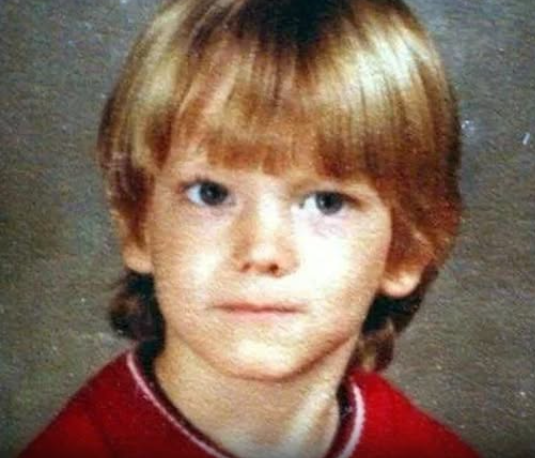
The transformation of Marshall Bruce Mathers III from an invisible, tormented child into the global phenomenon known as Eminem is one of the most stark and visceral narratives in the history of modern music. It is a story rooted in the gray, industrial landscape of Detroit, built upon a foundation of systemic neglect, physical brutality, and emotional abandonment. Rather than being crushed by the weight of a life that seemed designed to fail him, Marshall utilized the wreckage of his upbringing as the raw fuel for a creative engine that would eventually redefine the boundaries of hip-hop and the cultural zeitgeist.
Marshall’s journey began on October 17, 1972, in St. Joseph, Missouri, though his spirit would be forged in the transient housing of Michigan. The primary trauma of his infancy was the departure of his father, Marshall Mathers Jr., who exited the family dynamic before his son could even form memories. This absence was not a quiet one; it was a lingering, echoing void. As a child, Marshall would attempt to bridge this distance by writing letters to his father, only to have them return unopened, marked “return to sender.” In later reflections, Eminem would note that his father didn’t need to be a hero; he simply needed to acknowledge his son’s existence. This fundamental rejection created a psychological scar that would later manifest as the intense, searching vulnerability found in his most poignant lyrics.
The instability of his family life was compounded by a nomadic existence. Raised by his mother, Debbie Nelson Mathers, Marshall was perpetually the “new kid,” moving between Missouri and Detroit so frequently that he attended dozens of schools before finally dropping out in the ninth grade. This constant relocation made him a perennial outsider and a primary target for schoolyard predators. At the age of nine, the bullying transcended typical childhood friction and became life-threatening. While playing “King of the Hill,” Marshall was struck by a bully with a heavy object hidden inside a snowball. The impact was so severe it caused a brain hemorrhage and a concussion, leaving the young boy in a coma for five days. This level of physical trauma, coupled with the school system’s inability to protect him, instilled a deep-seated defensiveness and a reliance on his internal world for safety.
Home offered little reprieve from the hostility of the hallways. The household was a revolving door of temporary father figures and maternal volatility. Marshall has spoken extensively through his music about his mother’s struggles with substance abuse, specifically her reliance on prescription medications and her inability to provide the emotional anchor he required. While Debbie Mathers later disputed many of these claims—even initiating a multi-million dollar defamation lawsuit against her son—the perception of neglect was Marshall’s reality. In the absence of a stable parental guide, he turned to his uncle Ronnie Polkingharn, who introduced him to the world of hip-hop. Ronnie’s eventual suicide was yet another devastating blow to a young man already navigating a landscape of loss, but it cemented Marshall’s devotion to the one thing that had never abandoned him: the rhythm and the rhyme.
By his mid-teens, Marshall had found his weapon of choice. In the predominantly Black neighborhoods of Detroit, he was a white kid trying to break into a genre that was rightfully protective of its cultural roots. He had to be twice as good just to be considered half as worthy. He began competing in open-mic battles at the Hip-Hop Shop on West 7 Mile Road, where his sharp wit and technical dexterity began to turn skepticism into respect. It was during this era that he developed the “Slim Shady” persona—a dark, nihilistic, and unapologetically offensive alter ego that served as a lightning rod for all the anger and frustration he had suppressed since childhood. Slim Shady was the voice that allowed Marshall to say the unsayable, to confront his demons by becoming a monster himself.
The turning point of his career came when a demo tape found its way into the hands of Dr. Dre, the legendary producer and architect of West Coast rap. Dre’s decision to sign a white rapper from Detroit was a monumental gamble that changed the trajectory of the industry. Their collaboration on The Slim Shady LP (1999) was an explosion of technical prowess and psychological horror, blending cartoons of violence with the very real pain of poverty. Tracks like “My Name Is” and “Guilty Conscience” were provocations that forced the world to look at a segment of white American poverty that had been largely ignored by the mainstream media.
As his fame grew, so did the complexity of his personal life. In 1995, he welcomed his daughter, Hailie Jade Scott, with his high-school sweetheart, Kim. The birth of his daughter provided the first true sense of purpose Marshall had ever known. He became obsessed with providing the stability and material comfort he had lacked, a theme that would dominate his later work. Songs like “Mockingbird” and “Hailie’s Song” revealed the man behind the mask—a father desperately trying to break the cycle of dysfunction that had defined his own lineage. He eventually took on the responsibility of raising not only Hailie but also his niece, Alaina, and his daughter Stevie, proving that his commitment to family was the ultimate act of rebellion against his own upbringing.
The cultural impact of Eminem was solidified by the 2002 film 8 Mile. While semi-autobiographical, the film captured the grit and desperation of the Detroit rap scene, culminating in the anthem “Lose Yourself.” The song became the first rap track to win an Academy Award for Best Original Song, proving that Eminem’s story of perseverance was a universal one. Despite the accolades and the 220 million records sold worldwide, Marshall continued to battle the shadows of his past, including a near-fatal addiction to prescription drugs that shadowed the mid-2000s. His album Recovery (2010) served as a public testament to his journey toward sobriety, cementing his status as a survivor who was willing to share his failures as openly as his triumphs.
Today, Eminem stands as a titan of the genre, a member of the Rock and Roll Hall of Fame, and a technical master whose influence is visible in every corner of contemporary music. He lives a relatively private life in Detroit, far from the coastal hubs of the industry, remaining fiercely loyal to the city that raised him and broke him, only to see him put the pieces back together. His legacy is not merely one of record-breaking sales or provocative headlines; it is a legacy of resilience. He proved that words have the power to transform pain into a legacy, and that an abandoned child from Missouri could, through sheer force of will and lyrical genius, become the voice of a generation. He didn’t just survive the “King of the Hill” game of his youth; he took the hill and never looked back.