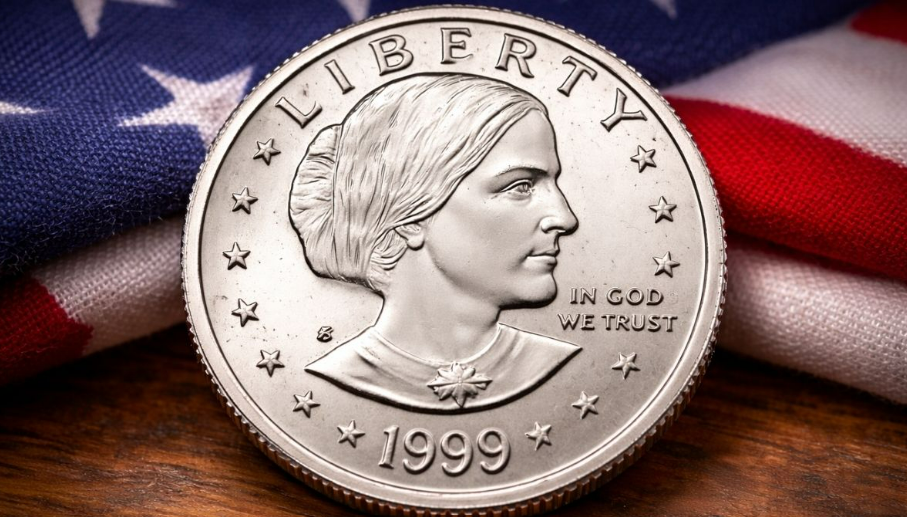
The 1999-P Susan B. Anthony dollar occupies a unique position in modern U.S. coinage. While it never gained widespread popularity in everyday commerce, it represents the final chapter of the Susan B. Anthony dollar series, closing a program that began in 1979 and ended just before the introduction of the Sacagawea dollar in 2000.
For most collectors, a standard 1999-P SBA dollar is worth only slightly more than face value. However, rare mint errors, unusual varieties, and exceptionally high-grade examples have transformed certain coins into major collector prizes. In 2026, some of these standout pieces are commanding four- and even five-figure prices at auction, drawing renewed attention from numismatists and casual collectors alike.
This in-depth guide breaks down the history, value drivers, rare errors, and current market prices of the 1999-P Susan B. Anthony dollar, helping you understand what makes some examples far more valuable than others.
A Look Back: Why the 1999-P SBA Dollar Matters
The Susan B. Anthony dollar debuted in 1979 as a historic milestone—it was the first circulating U.S. coin to feature a real woman, honoring women’s rights pioneer Susan B. Anthony. Despite its importance, the coin struggled in circulation due to its similarity in size and color to the quarter.
After production paused in 1981, the series returned briefly in 1999 to meet renewed demand for dollar coins before the launch of the Sacagawea dollar. This makes the 1999-P issue the final Susan B. Anthony dollar ever produced, adding historical significance to the coin.
Struck at the Philadelphia Mint, the 1999-P SBA dollar was produced in a copper-nickel clad composition, with a total mintage of approximately 29.6 million coins. While this figure suggests abundance, most examples entered circulation, leaving high-grade survivors and mint errors surprisingly scarce.
What Influences the Value of a 1999-P Susan B. Anthony Dollar?
Several factors determine how much a 1999-P SBA dollar is worth in 2026:
1. Coin Condition and Grade
Condition is the single most important value driver. Coins range from circulated examples to pristine Mint State (MS) pieces. Coins certified by leading grading services such as PCGS or NGC often sell for significantly higher prices.
2. Mint Characteristics
All 1999-P coins carry the “P” mint mark, indicating Philadelphia. While standard strikes are common, coins with unusual die characteristics or striking anomalies can be much rarer.
3. Mint Errors and Varieties
Errors created during the minting process—such as off-center strikes, double strikes, or wrong planchet errors—can dramatically increase a coin’s value.
4. Proof and Special Finish Coins
Proof coins, struck with polished dies for collectors, feature sharper details and mirror-like fields. High-contrast proof examples are especially desirable.
1999-P Susan B. Anthony Dollar Value Guide (2026)
Below is an updated value overview based on auction results, grading population data, and current collector demand:
| Coin Type / Variety | Key Feature | Estimated 2026 Value | Notes |
|---|---|---|---|
| 1999-P (Circulated) | Common circulated coin | $1 – $3 | Most examples fall here |
| 1999-P Uncirculated (MS60–MS64) | Basic mint state | $3 – $10 | Modest premium |
| 1999-P MS65–MS66 | Choice uncirculated | $20 – $100+ | Value rises quickly |
| 1999-P MS67 | Gem quality | $150 – $300+ | Scarce in this grade |
| 1999-P MS68 (Very Rare) | Near-perfect condition | $1,000 – $2,500+ | Extremely limited supply |
| 1999-P Proof (PR) | Mirror-like surfaces | $20 – $100+ | Collector-focused issue |
| 1999-P Deep Cameo Proof | Strong contrast | $100 – $300+ | Premium proof examples |
| Major Mint Errors | Off-center, double strike, etc. | $150 – $2,000+ | Depends on visibility |
| Wrong Planchet Error | Struck on Sacagawea planchet | $7,000 – $16,100+ | Among the rarest known |
Values reflect the 2026 collector market and may fluctuate based on demand and certified populations.
Rare Variety Highlight: The Sacagawea Planchet Error
The most famous and valuable 1999-P Susan B. Anthony dollar error is the coin struck on a Sacagawea dollar planchet. These errors occurred during the late stages of 1999 when both dollar coins were being produced simultaneously, allowing a small number of golden-colored planchets to slip into SBA production.
Only an estimated 8–10 examples of this error are known today. Because of their rarity and striking appearance, these coins have achieved auction prices ranging from $10,000 to over $16,000, making them one of the most valuable modern U.S. dollar errors.
Other Valuable Errors and Varieties to Watch For
Off-Center Strikes
Coins struck off-center can show missing portions of the design. The more dramatic the offset—especially if the date is visible—the higher the value.
Double Strikes
These coins display duplicated design elements caused by multiple strikes. Clear, bold doubling increases collector interest.
Proof-Like Business Strikes
Some circulation coins exhibit unusually reflective fields. While not true proofs, these pieces can sell for premiums due to eye appeal.
How to Identify a Valuable 1999-P SBA Dollar
If you’re checking pocket change or an inherited collection, use these expert tips:
- Confirm the date and mint mark: Look for “1999” and the “P” mint mark.
- Inspect overall condition: Sharp details and original luster matter.
- Watch for unusual color: A golden hue could indicate a wrong planchet.
- Check alignment: Off-center or misaligned designs may signal an error.
- Get professional authentication: Third-party grading can dramatically increase value and buyer confidence.
Final Thoughts
The 1999-P Susan B. Anthony dollar proves that even modern coins can hold significant value under the right circumstances. While most examples remain worth only $1 to $3, rare mint errors, proof coins, and high-grade survivors can be worth hundreds—or even tens of thousands—of dollars in 2026.
As the final issue of the Susan B. Anthony series, this coin continues to attract attention from collectors who appreciate both its historical importance and its hidden potential. If you believe you’ve found a rare variety or error, professional grading is the best step toward unlocking its true market value.