Most people think pennies are worthless, but some Lincoln penny coins are worth thousands-or even millions-of dollars. Rare minting errors, limited production years, and unique designs have turned ordinary one-cent coins into highly valuable collectibles. In this guide, we explore the most expensive Lincoln penny coins still in circulation and explain how you can identify these rare pennies before spending them.
Why Some Lincoln Pennies Are Worth So Much Money
Lincoln pennies, first minted in 1909 to commemorate Abraham Lincoln’s 100th birthday, have become one of America’s most collected coin series. But what transforms a common one-cent piece into a valuable collector’s item worth hundreds or thousands of dollars?
Several key factors determine a Lincoln penny’s value:
Rarity: Low mintage numbers or survival rates make certain years particularly scarce.
Mint Errors: Mistakes during the minting process create unique, valuable variations.
Metal Composition: Pre-1982 copper pennies have intrinsic metal value, while specific compositions like steel wartime cents are collectible.
Condition/Grade: Uncirculated coins with original luster command premium
prices.
Collector Demand: Popular varieties and historical significance drive market
value.
5 Pro Collector Insight
The most valuable Lincoln pennies are typically those with dramatic mint errors that occurred during production. These weren’t damaged after leaving the mint but were created with flaws during striking. Error coins are often unique or produced in very limited quantities, making them highly sought after by serious collectors.
Most Expensive Lincoln Penny Coins Ever Found
While museum pieces like the 1909-S VDB (valued at $1,000+ in good condition) are well-known, many valuable Lincoln pennies remain in circulation today. Here are some of the most notable high-value Lincoln cents:
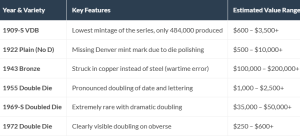
While these famous examples are well-documented, the exciting reality is that other valuable Lincoln pennies-especially error coins from more recent years-continue to circulate undetected.
Rare Lincoln Pennies Still in Circulation
Contrary to popular belief, valuable coins aren’t just locked away in collections or museums. Many rare Lincoln pennies continue to circulate, passing through countless hands without recognition. Here are the most likely valuable pennies you might still find in everyday change:
2009 Lincoln Bicentennial Pennies
The Four Design Varieties
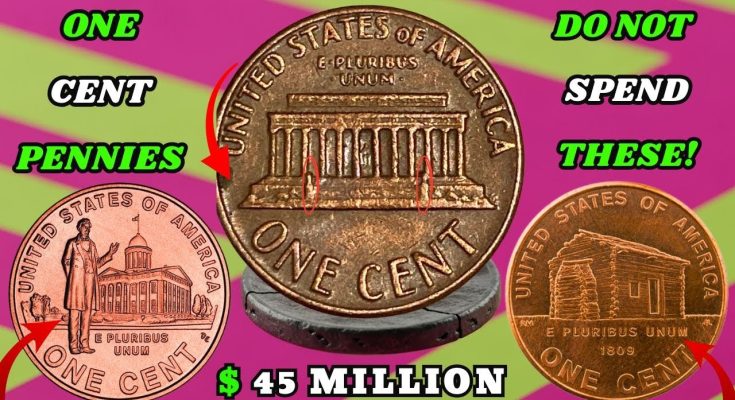
2009 marked the 200th anniversary of Abraham Lincoln’s birth, prompting the U.S. Mint to release four different reverse designs. While millions were produced, high-grade examples with mint errors are surprisingly valuable:
Birthplace design (Kentucky log cabin)
Formative Years design (Lincoln reading)
Professional Life design (Lincoln before Illinois state capitol)
Presidency design (U.S. Capitol dome)
Look for: double dies, off-center strikes, wrong planchet errors, and coins with exceptional mint luster.
1975 No Mint Mark Penny
The Philadelphia Mint Mystery
Struck at the Philadelphia Mint (which didn’t use mint marks at the time), these pennies are common in circulation but can hide valuable errors:
Double die obverse errors with visible doubling
Die cracks running through Lincoln’s portrait
Wrong planchet strikes (on dime or foreign coin blanks)
Off-center strikes with portions missing
An uncirculated 1975 no mint mark penny with strong errors can fetch hundreds to thousands of dollars.
1986 No Mint Mark Penny
The Zinc Core Era Errors
By 1986, pennies were copper-plated zinc, creating new types of mint errors:
Plating errors (bubbles, peeling, exposed zinc)
Double die varieties on date and inscriptions
Off-center strikes and clipped planchets
Die cracks creating “lightning bolt” effects
These errors are particularly noticeable on zinc-core pennies and are actively hunted by collectors.
These errors are particularly noticeable on zinc-core pennies and are actively hunted by collectors.
1992 No Mint Mark Penny
The Close AM Variety
The 1992 penny is famous for its “Close AM” variety where the A and M in AMERICA are nearly touching. Other valuable errors include:
Strong double dies visible without magnification
Die cracks and die breaks
Plating problems creating unique surfaces
Off-center strikes making each coin unique
High-grade 1992 error pennies regularly sell for significant amounts at auction.
1974-D Penny
The Denver Mint Pressure Year
The Denver Mint was pushing production limits in 1974, resulting in numerous errors:
Double die errors with bold doubling
Dramatic die cracks and die breaks
Off-center strikes with missing design elements
Wrong metal compositions (though rare)
As one of the last solid copper pennies (pre-1982), condition is particularly important for 1974-D cents.
How to Identify Valuable Lincoln Pennies
Spotting valuable pennies requires knowing what to look for. Follow this systematic approach:
1. Check the Date and Mint Mark
Start by examining the coin’s date and mint mark location (below the date on Lincoln cents after 1968, on the reverse for earlier issues). Key dates include 1909-S, 1914-D, 1922 Plain, 1931-S, and 1955 Doubled Die, but don’t overlook more recent error coins.
2. Look for Mint Errors
Common valuable errors include:
Doubled Dies: Look for shadowing or doubling of letters, numbers, or Lincoln’s features
Off-Center Strikes: Design is misaligned, leaving blank metal exposed
Die Cracks/Breaks: Raised lines across the coin’s surface
Wrong Planchet: Coin struck on wrong metal blank (wrong weight/color)
Clipped Planchets: Crescent-shaped missing metal from improper cutting
3. Assess Condition
Condition dramatically affects value. Look for:
Mint Luster: Original shiny surface with cartwheel effect when tilted
Sharp Details: All design elements should be crisp and fully defined
No Wear: Check high points like Lincoln’s cheek and coat lapel
Clean Surfaces: No corrosion, spots, or environmental damage
4. Use Proper Tools
Magnification is essential. A simple 5x-10x jeweler’s loupe can reveal doubling and errors invisible to the naked eye. Good lighting is equally important.
Quick Identification Checklist
Check for key dates and mint marks
Examine for doubling, especially on dates and inscriptions
Look for misaligned or incomplete strikes
Assess condition-shine, details, and wear
Compare with known error examples online
When in doubt, consult a professional coin dealer
Should You Spend or Save These Pennies?
If you suspect you’ve found a valuable Lincoln penny, do not spend it. Here’s why:
Face Value vs. Collector Value: That “ordinary” penny could be worth 100 to 100,000 times its face value
Increasing Rarity: As coins continue to circulate, well-preserved examples become scarcer
Market Appreciation: Rare error coins often appreciate over time, especially when certified
The “Found Treasure” Factor: Many collectors specifically seek coins found in circulation
Instead of spending potentially valuable pennies:
1. Examine carefully using the identification methods above
2. Protect immediately in a coin holder or capsule to prevent damage
3. Research comparable sales on eBay completed listings or auction archives
4. Consider professional grading for potentially valuable coins (PCGS or NGC certification adds value and authenticity)
5. Consult reputable dealers or coin clubs for expert opinions
Ready to Check Your Change?
You might be walking past a small fortune every day. Take 10 minutes to examine the pennies in your pocket, jar, or piggy bank. Look for the dates, mint marks, and errors mentioned in this guide. That “worthless” penny could be your next great discovery!
Final Thoughts
The hunt for valuable Lincoln pennies combines history, detective work, and the thrill of potential discovery. While most pennies in circulation are indeed worth only one cent, the possibility of finding a rare error or key date coin makes examining your change an exciting prospect.
Remember that condition is paramount-a worn rare date may have modest value, while a pristine modern error coin can be worth thousands. Develop your eye for detail, use proper magnification, and always handle potential finds carefully to preserve their surfaces.
The most important lesson is simple: Never assume a penny is worthless until you’ve examined it closely. The next life-changing coin could already be in your pocket, waiting to be recognized.
Happy hunting, and may your next penny examination reveal a hidden treasure!
Disclaimer: Coin values fluctuate based on market conditions, collector demand, and certification. Always consult multiple sources and consider professional appraisal for potentially valuable coins. This article is for educational purposes and does not constitute financial advice.