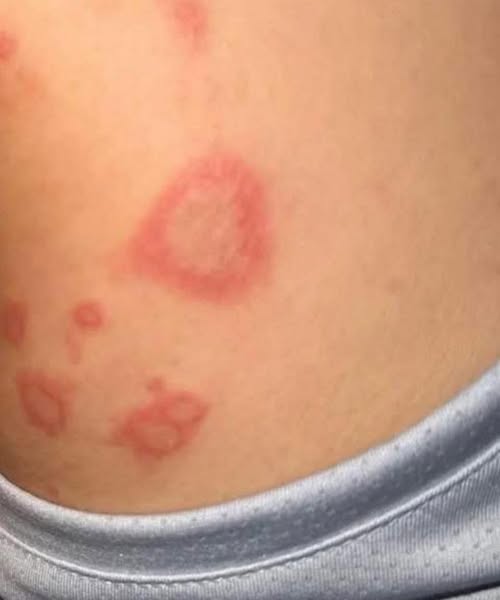
Seeing round, reddish marks appear on your skin can feel alarming at first. It’s natural to wonder whether they signal an allergy, an infection, or something more serious. Skin specialists note, however, that circular or ring-shaped rashes are fairly common and often manageable. The key is understanding what these patterns may suggest so you can respond calmly instead of jumping to worst-case conclusions.
The shape of a rash can offer helpful clues, though it’s never the full story on its own. Circular patches often develop when irritation or inflammation spreads outward from a central point, leaving the middle lighter than the edges. This pattern is frequently seen in superficial fungal conditions, but it can also appear in certain inflammatory skin disorders. While the shape narrows down possibilities, doctors stress that color, texture, location, and symptoms like itching or scaling all matter when identifying the cause.
One of the most common explanations for round red patches is a mild fungal infection, often referred to as ringworm—even though no worms are involved. These rashes tend to thrive in warm, damp areas of the body and may show slightly raised or scaly borders with clearer skin in the center. That said, not every circular rash is fungal. Conditions such as nummular eczema, some forms of psoriasis, or contact reactions to soaps, fabrics, or detergents can produce similar-looking marks, though they often differ in texture and response to treatment.
Environmental factors also play a significant role. Heat, moisture, friction, and prolonged sweating can weaken the skin’s natural barrier, making it more vulnerable to irritation or infection. While many circular rashes improve with basic care, medical advice is recommended if a patch spreads quickly, becomes painful, doesn’t improve after a couple of weeks, or if you have underlying health conditions. Avoid guessing with treatments, especially mixing products, as using the wrong remedy can worsen the issue. Most importantly, these rashes are rarely a sign of something dangerous—when properly identified, they are usually straightforward to manage and resolve.