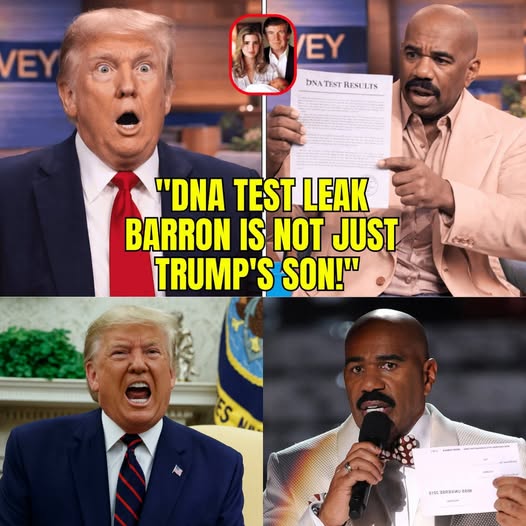
A Viral “Trump vs. Steve Harvey” Clip Shows How Political Drama Is Being Manufactured Online
A YouTube video titled “Trump Publicly Mocked Steve Harvey’s Intelligence — Then Harvey Shut It Down” is circulating with the promise of a sharp, televised reversal: an insult, a poised comeback, and a room that suddenly “turns.” But the transcript reads like narrated drama rather than a verifiable broadcast segment — full of cinematic cues (“the room leaned forward,” “cameras tightened their frames”) and sweeping claims presented without the basic specifics journalism requires: a date, a network, a host, a full clip, or independent corroboration.
In that sense, the video fits a familiar genre of online political content: stories that borrow the posture of news while operating like scripted fiction. The structure is engineered for satisfaction. A powerful figure “dominates,” a respected celebrity stays calm, the audience recognizes “truth,” and the moment becomes instantly shareable. The transcript’s language repeatedly signals that the point is moral contrast — composure versus bluster — not documented reality.
That matters because Steve Harvey and Donald Trump do have a real, well-covered history. In January 2017, Harvey met Trump at Trump Tower to discuss what Harvey described as “positive change” in America’s cities and related initiatives, including conversations that involved Ben Carson, then the Housing and Urban Development secretary-designate. The encounter was recorded publicly in the Trump Tower lobby, including brief remarks to the press.
The backlash Harvey received afterward was also widely reported. On his radio show and in subsequent interviews, he said he was hurt by the intensity of criticism, while insisting that meeting with a president-elect about community issues was worthwhile.
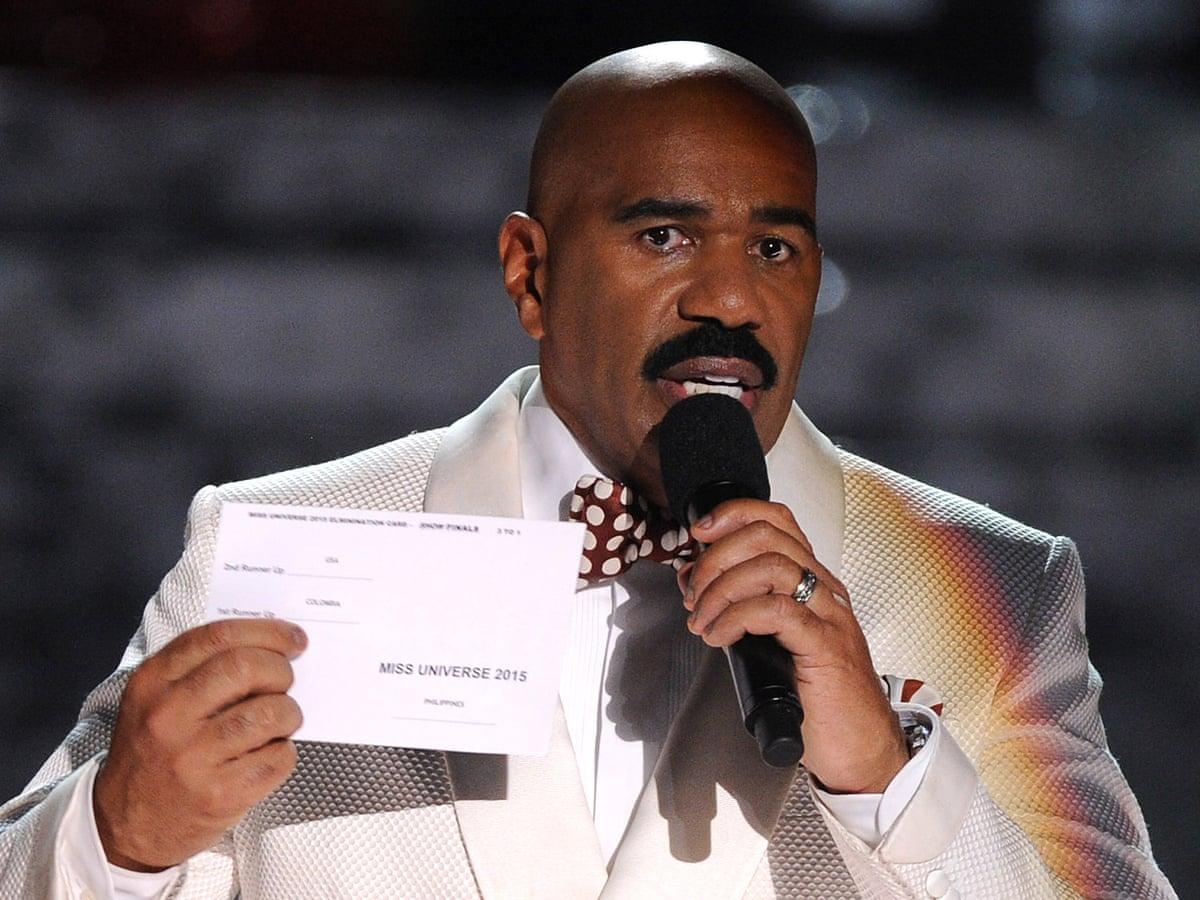
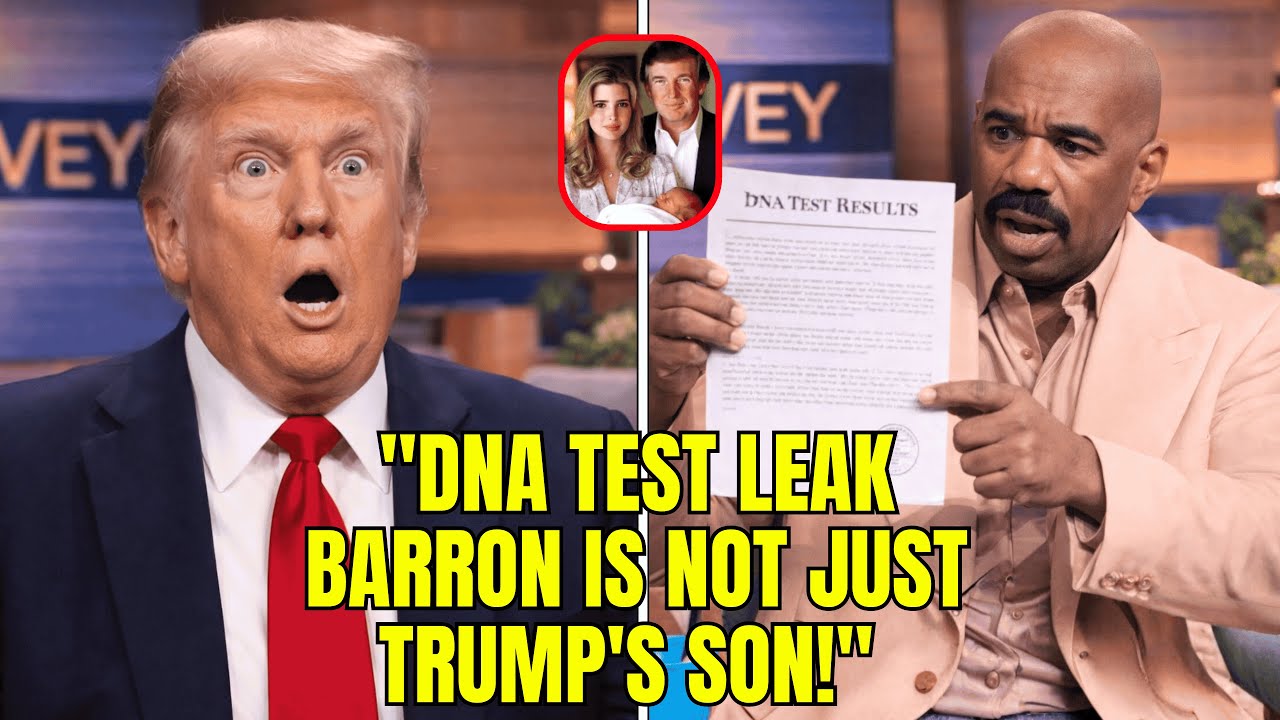
The viral transcript, however, is not describing that documented moment. Instead, it constructs a made-for-the-internet “live TV showdown,” including a second-act escalation built around an anonymous “DNA report” said to involve private family matters. No reputable sourcing is provided in the transcript, and the scenario is framed in the language of innuendo and suspense rather than verifiable reporting. In practice, such claims function less as information than as an attention mechanism: they encourage viewers to keep watching, keep sharing, and keep arguing — even when there is nothing concrete to confirm.
This is the modern alchemy of political virality. Start with two recognizable names. Add a plausible emotional arc. Sprinkle in the aesthetics of evidence (“tables,” “footnotes,” “internal paperwork”) without offering evidence anyone can check. The result can feel persuasive precisely because it is written to mimic the rhythms of accountability journalism while withholding its substance.
None of that diminishes the real appeal of the transcript’s central lesson — that restraint can be powerful. But it does highlight a growing media problem: in the current clip economy, the “most important moment” is often the one that never happened, produced to look and sound like it did.
For viewers, the practical question is simple: can you trace the story back to a primary source — a full broadcast, a transcript from a network, a date and program listing, or multiple independent reports? When a video cannot provide those basics, what it’s offering is not news. It’s narrative — and the difference has rarely mattered more.