$375,000+ 1943 Copper Penny in
 The Legendary 1943 Copper Penny Explained
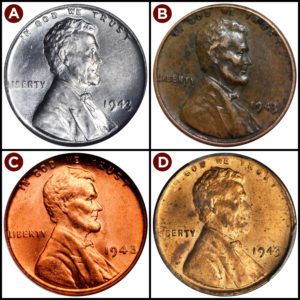
During World War II, copper was urgently needed for military equipment. As a result, the U.S. Mint switched penny production in 1943 from copper to zinc-coated steel.
However, a historic mistake occurred.
A small number of copper planchets (coin blanks from 1942) were accidentally left in the presses and struck with the 1943 Lincoln cent design. This error produced what is now considered the most famous U.S. penny ever created.
 Estimated survivors: Only 10–15 genuine examples worldwide
 Known as: The Holy Grail of Lincoln Pennies
 Step-by-Step: How to Tell If You Have a Real 1943 Copper Penny
If you believe you’ve found one, follow these steps carefully before doing anything else.
 Step 1: Magnet Test (Most Important)
 Steel 1943 penny: Sticks strongly to a magnet
 Real 1943 copper penny: Does NOT stick
 Use a strong refrigerator or neodymium magnet for accurate results.
 Step 2: Weight Test
 Genuine copper penny: ~3.11 grams
 Steel or altered coin: ~2.7 grams
A digital jewelry scale is highly recommended.
Step 3: Inspect the Date Closely
Many fakes are created by altering a 1948 penny.
 Authentic 1943:
- The “3” sits slightly lower than the “4”
- Natural, unaltered edges on the numbers
Fake versions:
- Filed or reshaped “8” into a “3”
- Uneven or distorted date details
 1943 Copper Penny Value Guide (2025 Market)
| Grade | Condition | Estimated Value |
|---|---|---|
| MS-63 RB | Mint State Red-Brown |  $375,000+ $375,000+ |
| AU-55 | Light Circulation | $250,000 |
| XF-45 | Moderate Wear |  $180,000 $180,000 |
Record Sale:
A flawless MS-64 Red example sold for $1.7 million at auction.
Why the 1943 Copper Penny Is Worth a Fortune
Minted during WWII — historical significance
One of the rarest U.S. coins ever produced
Displayed in major museums worldwide
Constant demand from elite collectors
This combination ensures that values continue to rise, even decades later.
 Common Mistakes That Destroy Value
Cleaning or polishing the coin
Trusting “it looks real” without testing
Selling without professional certification
Accepting offers from unverified buyers
 Only PCGS or NGC certification is accepted by top auction houses.
 Professional Verification: What Experts Check
Before any high-value sale, experts perform:
60x die-marker inspection
 XRF metal analysis (confirms true bronze composition)
 Edge and surface examination
 PCGS or NGC certification
Without this process, a coin cannot reach full market value.
Where to Sell a Verified 1943 Copper Penny
Heritage Auctions — World-record coin sales
Stack’s Bowers Galleries — Trusted by elite collectors
Private museum transactions — Discreet, high-value deals
 Think You Found One? Here’s What to Do Next
If your penny passes the magnet and weight tests:
Include:
 Clear photos (front & back)
- Weight verification video
- Magnet test clip
 You’ll receive FREE:
- 1943 Copper Penny Authentication Guide
- Auction-ready selling strategy
- Expert valuation review
 “Fewer than 20 exist — yours could be the next discovery.”
— PennyVerse Authentication Team
 Final Thoughts: Check Before You Spend
Most 1943 pennies are worth only a few cents — but one rare exception can be worth $375,000 or more.
Before dismissing an old penny as ordinary, take a moment to test it.
History’s greatest coin discoveries often start with a second look.