The year 1982 was a turning point in United States coinage history. Collectors know it as the year when the composition of the Lincoln cent changed from mostly copper to copper-plated zinc. This transition created a fascinating mix of varieties, including both large date and small date designs. For coin enthusiasts, understanding these differences is essential because they directly influence rarity, collectability, and value.
The Shift from Copper to Zinc
Prior to 1982, pennies were made of 95 percent copper and 5 percent zinc. Rising copper prices forced the U.S. Mint to reduce production costs. As a result, the Mint introduced a new composition: 97.5 percent zinc with a thin copper plating. During the transition, both copper and zinc cents were struck in 1982, creating multiple varieties that collectors now carefully distinguish.
Large Date vs Small Date Varieties
The most intriguing aspect of the 1982 penny is the difference in date size. On some coins, the numerals appear larger and bolder, while on others they are smaller and more delicate. These differences are not accidental. They reflect the use of different dies during production. Collectors categorize them as large date and small date varieties, and each has its own appeal.
How to Identify a Large Date
Large date pennies show numerals that are thicker and more prominent. The “2” in 1982 has a rounded curve at the top, and the “8” appears fuller. When viewed side by side with a small date, the large date looks heavier and more robust. Beginners often find it easier to spot the large date first because of its bold appearance.
How to Identify a Small Date
Small date pennies are more subtle. The numerals are thinner, and the “2” has a sharper angle at the top. The “8” looks slightly taller and less rounded. Collectors often describe the small date as having a more refined or delicate style. Because it is less common in certain compositions, the small date variety can be more valuable.
The Eight Varieties of 1982 Pennies
The year produced a total of eight distinct varieties. These include copper large date, copper small date, zinc large date, and zinc small date from both the Philadelphia and Denver Mints. Each combination represents a unique collectible. For example, a 1982-D small date copper penny is considered one of the rarest and most sought-after varieties.
The Famous 1982-D Small Date Copper
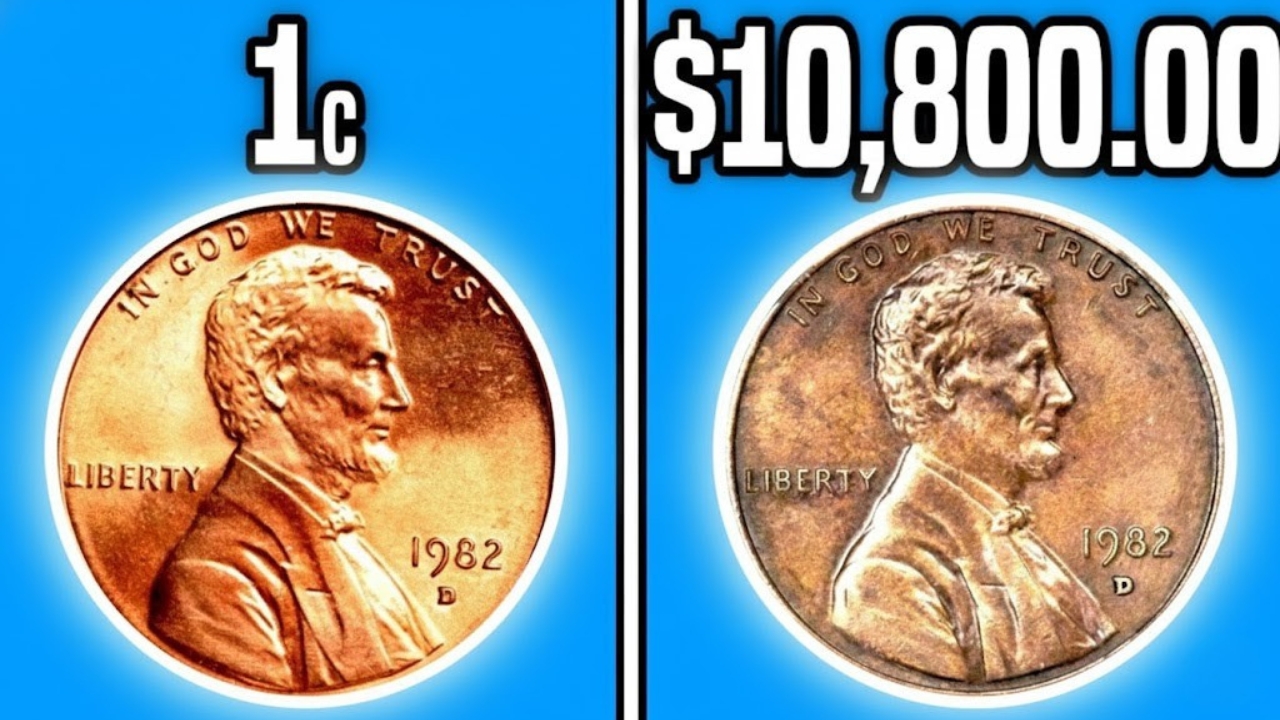
Among all 1982 pennies, the 1982-D small date copper stands out as legendary. Only a handful are known to exist, making it a true rarity. This coin was struck in copper when the Denver Mint was supposed to be using zinc planchets. Its accidental creation has made it one of the most valuable modern Lincoln cents. Auction records show that examples can sell for thousands of dollars depending on condition.
Value of Common Varieties
Not every 1982 penny is worth a fortune. Most large date and small date varieties in circulated condition are worth only face value. However, uncirculated examples, especially those graded by professional services, can bring premiums. Copper versions are generally more desirable than zinc, and small date varieties often command higher prices than large date counterparts.
Collecting Strategies
Collectors approach 1982 pennies in different ways. Some aim to assemble all eight varieties as a complete set. Others focus on finding high-grade examples of the rarer small date versions. Beginners often start by learning to distinguish copper from zinc, then practice spotting the date size differences. This hands-on approach builds skill and appreciation for the subtleties of coin design.
Copper vs Zinc Testing
One challenge collectors face is determining whether a 1982 penny is copper or zinc. A simple test involves weighing the coin. Copper cents weigh about 3.11 grams, while zinc cents weigh about 2.5 grams. A precise scale can quickly reveal the composition. This test is especially important when searching for rare varieties like the 1982-D small date copper.
Market Trends
The market for 1982 pennies has remained strong because of their unique place in numismatic history. While common varieties are plentiful, the rare ones continue to attract attention from serious collectors. Auction houses regularly feature high-grade examples, and prices reflect the ongoing demand. As more people learn about the differences between large date and small date coins, interest continues to grow.
Errors and Oddities
In addition to the standard varieties, some 1982 pennies show minting errors. Off-center strikes, double dies, and other anomalies can add value. Collectors who enjoy searching rolls of pennies often hope to discover such oddities. While rare, these errors highlight the complexity of the Mint’s transition during that year.
Historical Significance
The 1982 penny represents more than just a change in composition. It reflects broader economic pressures and the Mint’s response to rising material costs. For historians, the coin tells a story about inflation, resource management, and adaptation. For collectors, it offers a tangible connection to that moment in American history.
Tips for Beginners
New collectors should start by examining as many 1982 pennies as possible. Practice distinguishing large date from small date. Invest in a good scale to test copper versus zinc. Consider purchasing a reference book or guide to Lincoln cents for detailed images. Above all, be patient. Building knowledge takes time, and the rewards come with experience.
Investment Potential
While not every 1982 penny is a valuable investment, certain varieties hold strong potential. The 1982-D small date copper is the standout, but even high-grade examples of other varieties can appreciate over time. Collectors who focus on quality and rarity often see the best returns. As with any investment, research and caution are essential.
Conclusion
The 1982 penny is a fascinating chapter in American coinage. Its mix of copper and zinc, combined with large date and small date varieties, creates a rich field for collectors. Whether you are searching for the elusive 1982-D small date copper or simply learning to distinguish the common varieties, this coin offers endless opportunities for discovery. For those who appreciate history, design, and rarity, the 1982 penny remains a timeless treasure.