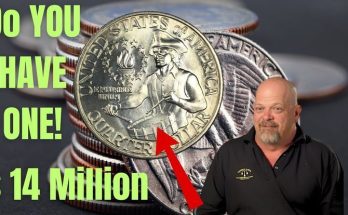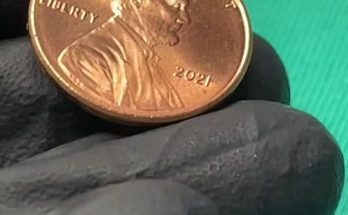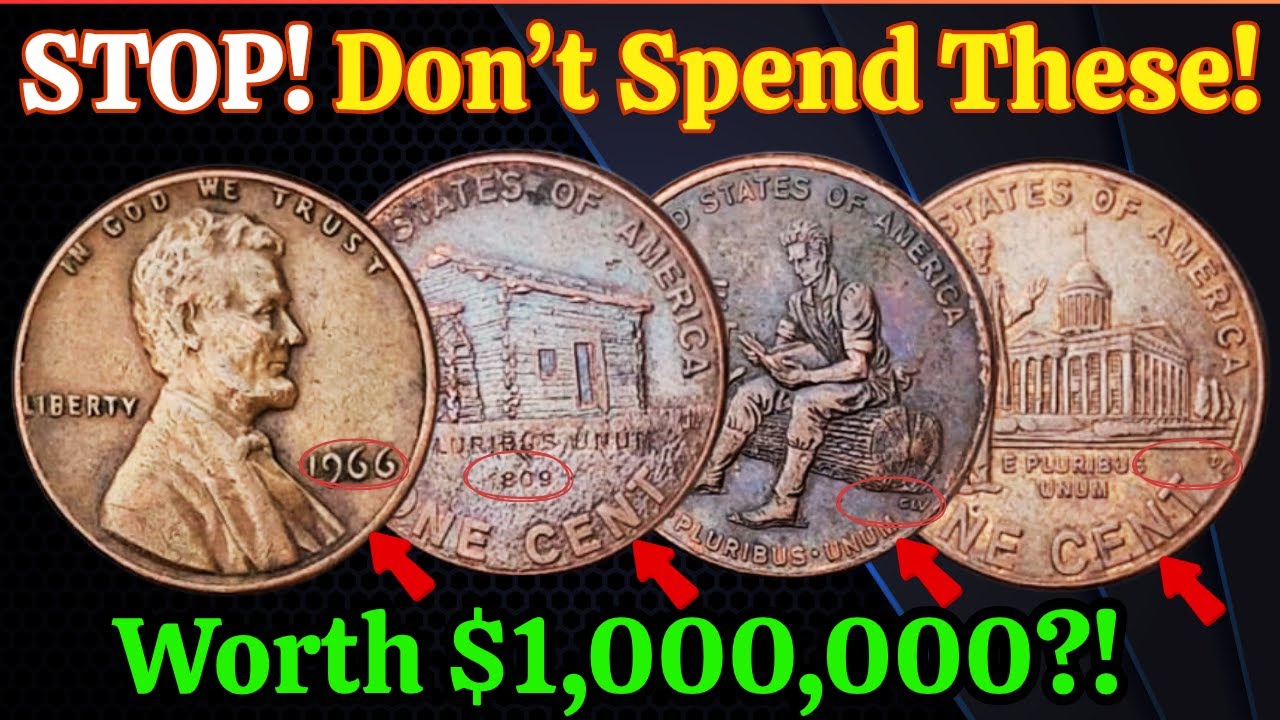
What if the loose change rattling in your pocket is worth far more than 1 cent?
Some Lincoln pennies that look completely ordinary have sold for thousands—and even millions—of dollars at real auctions.
In this guide, we break down 5 rare and valuable Lincoln cents, how to identify them step-by-step, and the highest verified prices ever recorded.
Let’s dive in 
 #5 — 1967 No-Mint-Mark Lincoln Penny (Worth Up To $4,100)
 Why This Coin Is Special
In 1967, the U.S. Mint removed all mint marks to prevent coin hoarding during a national shortage.
That means every 1967 penny — from Philadelphia, Denver, and San Francisco — looks identical.
 Step-by-Step Identification
- Look for the date 1967
- No mint mark under the date
- Check for premium qualities:
- Full red luster
- Sharp strike
- No heavy marks
 Valuable Error Varieties
Because of high-speed production:
- Off-center strikes
- Die cracks
- Doubled dies
- Clipped planchets
These errors in uncirculated condition can be worth hundreds to thousands.
 Highest Verified Sale
- MS67 Red — $4,100 (PCGS-certified)
 #4 — 1966 No-Mint-Mark Lincoln Penny (Worth Up To $1,100+)
Historical Background
From 1965 to 1967, the Mint produced no U.S. coins with mint marks to stop collectors from hoarding them.
So every 1966 penny has no mint mark, no matter where it was struck.
How to Identify
- Date 1966
- Blank space under date
- Look for:
- Bright red color
- No scratches
- Strong details
Valuable Errors
Collectors seek:
- Doubled die obverses
- Broad strikes
- Transitional planchet errors
- Off-center strikes
Highest Verified Price
- MS67 Red — $1,100
- Major errors: $300–$600
 Why It’s Rare
Most entered circulation → very few survived in high grade.
 #3 — 2009 No-Mint-Mark “Birth & Early Childhood” Penny (Worth Up To $1,200)
Why Collectors Want It
Released for:
- 200th anniversary of Lincoln’s birth
- 100 years of the Lincoln cent
How to Identify
- Design shows a log cabin
- No mint mark (Philadelphia)
- Reverse designer: Richard Masters
- Look for full red luster
Valuable Errors
Watch for:
- Doubled-die reverse (logs & window)
- Die cracks
- Plating errors exposing zinc
- Off-center strikes
Highest Verified Sale
- MS67 Red — $1,200
- Strong doubled-die examples: $500–$800
 #2 — 2009 No-Mint-Mark “Formative Years” Penny (Worth Up To $1,200)
Design Significance
Depicts young Lincoln in Indiana (1816–1830)
Reverse artist: Charles Vickers
Identification Steps
- Lincoln sitting on a log reading
- No mint mark under 2009
- Look for:
- Sharp fingers & book details
- Bright copper-red surfaces
Valuable Varieties
Highly collectible errors include:
- Doubled-die reverse (Lincoln’s fingers)
- Die cracks across book
- Partial collar strikes
Highest Recorded Price
- MS67 Red — $1,200
- Error varieties: $500–$900
 #1 — 2009-D “Professional Life” Penny (Worth Up To $1,500)
Why This Coin Stands Out
Shows Lincoln at the Old State Capitol in Springfield, Illinois — marking his rise in leadership.
This was the third coin in the 2009 series and the last before the Shield cent in 2010.
How to Identify
- Look for 2009-D mint mark (Denver)
- Lincoln standing between columns
- Reverse designers:
- Joel Iskowitz
- Don Everhart
Valuable Minting Errors
Collectors prize:
- Doubled-die obverse
- Misaligned die strikes
- Die cracks
Highest Verified Auction Sale
- MS68 Red — $1,500 (PCGS)
- Errors sell for $500–$1,000
 BONUS FACT — Most Valuable Lincoln Penny Ever
The Record Holder:
1943 Bronze Lincoln Penny
Highest Sale Price:
$1,700,000
Accidentally struck on bronze instead of steel during WWII — only a few exist.
Final Tips If You Find One
 DO:
DO:
- Handle by edges only
- Store in a coin holder
- Consider PCGS or NGC grading
 DO NOT:
- Clean the coin (kills value)
- Sell before authentication
Your pocket change could be hiding history worth thousands.