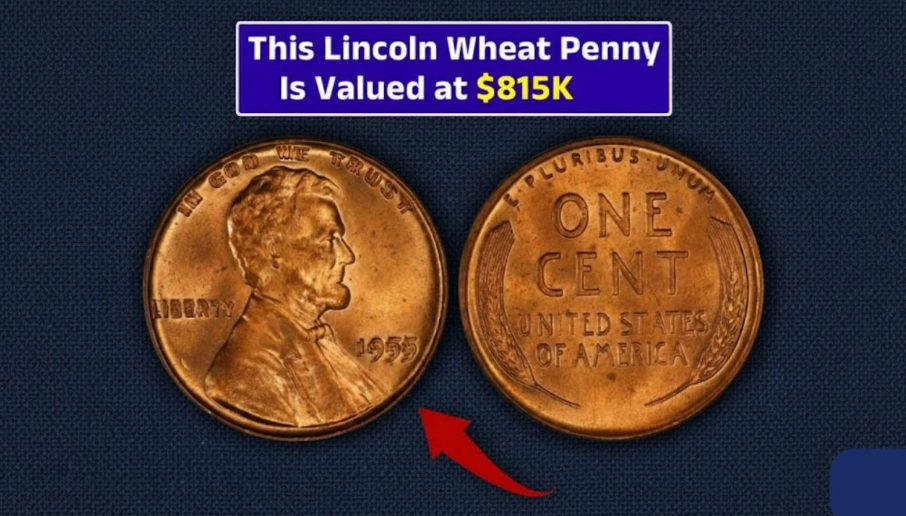
Lincoln Wheat Penny Valued at $815K: Sometimes the most ordinary objects carry extraordinary stories. A simple one-cent coin, often ignored or dropped into a jar, has the potential to be worth more than a luxury home. Among American coins, the Lincoln Wheat Penny continues to surprise collectors and everyday people alike, especially after one rare example reached an astonishing auction price of $815,000. What makes this coin so special is not just its age, but a rare blend of history, accident, and scarcity.
A Coin That Changed American Currency History
The Lincoln Wheat Penny first entered circulation in 1909, marking a turning point in U.S. coin design. For the first time, a real historical figure appeared on a circulating American coin. Abraham Lincoln’s portrait honored his 100th birth anniversary, while the reverse side displayed two wheat stalks symbolizing national prosperity. This design remained in use until 1958, allowing generations of Americans to unknowingly carry a meaningful piece of history in their pockets.
Lincoln Wheat Penny Value Overview
| Penny Type | Year | Key Feature | Estimated Value |
|---|---|---|---|
| Lincoln Wheat Penny | 1909-S VDB | Designer initials, low mintage | $1,000 – $50,000+ |
| Lincoln Wheat Penny | 1914-D | Scarce Denver issue | $500 – $25,000 |
| Lincoln Wheat Penny | 1922 No D | Missing mint mark | $5,000 – $50,000 |
| Lincoln Wheat Penny | 1931-S | Low production year | $100 – $5,000 |
| Lincoln Wheat Penny | 1943 Copper | Wrong metal error | $100,000 – $815,000+ |
The Accidental 1943 Copper Penny That Made Headlines
During World War II, copper became a critical resource for military equipment, forcing the U.S. Mint to produce steel pennies coated with zinc in 1943. However, a small number of copper blanks from the previous year remained in the production process. These leftover blanks were mistakenly struck with the 1943 date, creating one of the rarest coins in American numismatic history. Only about 20 to 30 genuine 1943 copper Lincoln Wheat Pennies are believed to exist today. One such coin, preserved in exceptional condition, later sold for $815,000 at auction, proving that even a tiny minting oversight can transform a one-cent coin into a life-changing asset.
Valuable Wheat Pennies Beyond the Famous 1943 Error
Although the 1943 copper penny attracts the most attention, several other Wheat Pennies are highly valuable due to limited minting or unusual errors. Coins produced at the San Francisco and Denver mints often command higher prices, especially when mint marks are missing or designs show doubling. These pennies continue to surface in inherited collections and old storage boxes.
How Collectors Recognize a Rare Lincoln Penny
Identifying a valuable Wheat Penny begins with carefully examining the date and mint mark. Certain years are immediately recognized as rare by collectors. In the case of 1943 pennies, color plays a major role, as steel pennies stick to magnets while genuine copper examples do not. Beyond dates, collectors look for striking errors such as doubled lettering, off-center designs, or missing details, all of which can dramatically increase a coin’s value.
Why Professional Grading Makes a Big Difference
The condition of a coin can significantly influence its market price. Two identical pennies from the same year may differ in value by tens of thousands of dollars depending on wear and preservation. Professional grading services like PCGS and NGC assess coins under strict standards and authenticate them, giving buyers and sellers confidence and helping rare coins achieve their true market worth.
Hidden Treasures Still Turn Up Today
Despite their age, Lincoln Wheat Pennies are still occasionally discovered in everyday settings. People continue to find rare examples in old jars, family heirlooms, and forgotten collections. While such discoveries are rare, they serve as a reminder that valuable history can still be hiding in plain sight.
Frequently Asked Questions
What is a Lincoln Wheat Penny?
It is a one-cent U.S. coin minted from 1909 to 1958, featuring wheat stalks on the reverse side.
Why is the 1943 copper penny so valuable?
It was mistakenly struck on copper instead of steel, making it extremely rare.
Can Wheat Pennies still be found in circulation?
Yes, although uncommon, some still appear in old collections or inherited coin holdings.
Should a rare penny be graded before selling?
Yes, professional grading helps confirm authenticity and often increases resale value.