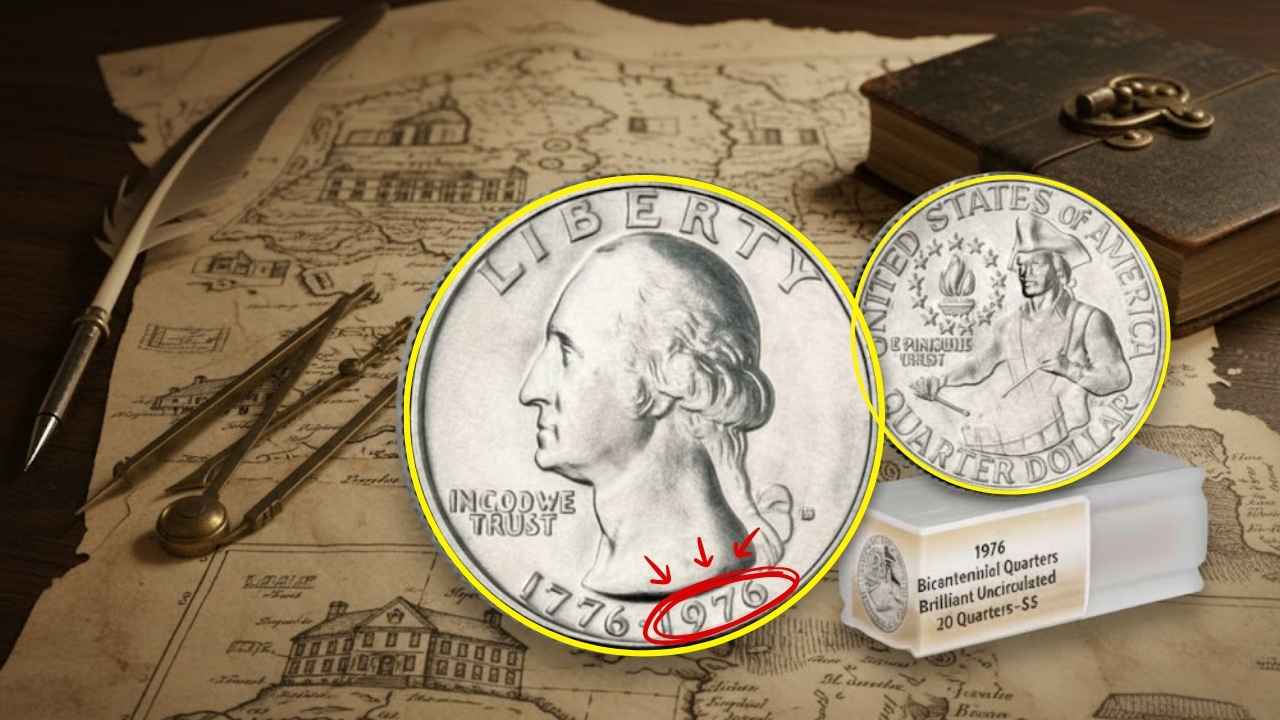
1976 Bicentennial Quarter Value Guide: The 1976 Bicentennial quarter stands as one of the most recognizable coins in U.S. history. Created to honor 200 years of American independence, it features a special dual date, 1776–1976, and a colonial drummer on the reverse. Although hundreds of millions were minted, interest in this coin remains strong due to silver issues, minting errors, and persistent rumors of ultra-valuable examples. Understanding what truly makes a Bicentennial quarter valuable is essential for collectors who want facts, not hype.
1976 Bicentennial Quarter Rare Value Chart
| Coin Type | Key Identifying Feature | Circulated Value Range | High-Grade or Certified Value |
|---|---|---|---|
| 1976-S Silver Proof | 40% silver, proof finish | $5 to $10 | $100 to $250+ |
| 1976-S Double Die Obverse | Visible doubling on date or lettering | $50 to $100 | $300 to $500+ |
| 1976-P Silver Planchet Error | Struck on silver instead of copper-nickel | $100 to $200 | $500 to $800+ |
| 1976 Off-Center Strike | Partial or misaligned design | $50 to $150 | $400 to $1,000+ |
Background of the Bicentennial Quarter
The U.S. Mint issued Bicentennial quarters during 1975 and 1976, all carrying the same commemorative date. Production took place at the Philadelphia, Denver, and San Francisco mints. While circulation strikes were made from copper-nickel, the San Francisco Mint also produced special silver-clad versions aimed at collectors. These coins were widely saved, which explains why most examples remain common today.
Why the Bicentennial Quarter Attracts Collectors
Collectors appreciate this quarter for its historic theme and its departure from the traditional eagle reverse design. Silver-clad proofs are especially popular because they contain precious metal and were produced in smaller quantities. Mint errors and unusual varieties further increase demand, as they represent mistakes that slipped through quality control and survived into collectors’ hands.
Understanding the $3 Million Bicentennial Quarter Claims
Stories claiming a 1976 Bicentennial quarter is worth $3 million frequently circulate online, often without credible evidence. No verified auction records or grading service documentation support such a valuation. These claims usually involve hypothetical one-of-a-kind errors or unconfirmed compositions. While it is true that extraordinary mint errors can command high prices, collectors should rely on authenticated sales rather than sensational headlines.
Rare Bicentennial Quarter Errors and Valuable Varieties
Some of the most sought-after Bicentennial quarter errors include double die obverses, where letters or numbers appear doubled, and off-center strikes showing incomplete designs. Wrong-planchet errors, where the coin is struck on an incorrect metal, are also highly collectible. The value of these errors depends heavily on how dramatic the mistake is and how well the coin has been preserved.
Importance of Condition and Professional Grading
Condition plays a major role in determining value. Coins graded Mint State or Proof with strong eye appeal sell for significantly more than worn examples. Professional grading by services such as PCGS or NGC provides authentication, assigns an official grade, and increases buyer confidence. Certified coins are easier to sell and often achieve higher prices at auction.
How to Identify a Potentially Valuable Bicentennial Quarter
Careful inspection is essential. Use proper lighting and magnification to look for doubling, misalignment, or unusual edges. Silver-clad quarters can often be identified by their weight and lack of a visible copper core on the edge. Any coin that appears unusual should be evaluated by a professional before assumptions about value are made.
Common Misunderstandings Among Collectors
Many people believe all Bicentennial quarters are rare, which is not the case. High mintage numbers mean most are only worth face value. A missing mint mark does not automatically indicate rarity, and online asking prices should never be mistaken for actual sale prices. Knowledge and verification are key to avoiding disappointment.
Collecting and Preserving Bicentennial Quarters
Proper storage helps protect coins from damage and loss of value. Holders, capsules, or albums designed for coins are recommended. Building a focused collection that includes silver proofs, certified high-grade examples, and legitimate error coins can provide long-term satisfaction and potential appreciation. Staying informed through auctions and reputable numismatic sources is equally important.
Final Verdict
The 1976 Bicentennial quarter remains an iconic and collectible U.S. coin. While most examples are common, silver issues, genuine mint errors, and high-grade certified coins can carry meaningful premiums. Claims of a $3 million Bicentennial quarter should be viewed cautiously unless supported by professional grading and documented sales. Smart collecting is based on research, realism, and verified information.
Disclaimer
This article is intended for educational and informational purposes only. Coin values fluctuate based on market demand, rarity, condition, and certification. References to high-value coins are based on reported data and collector trends and do not guarantee specific outcomes. Professional authentication and grading are strongly recommended before making buying or selling decisions.