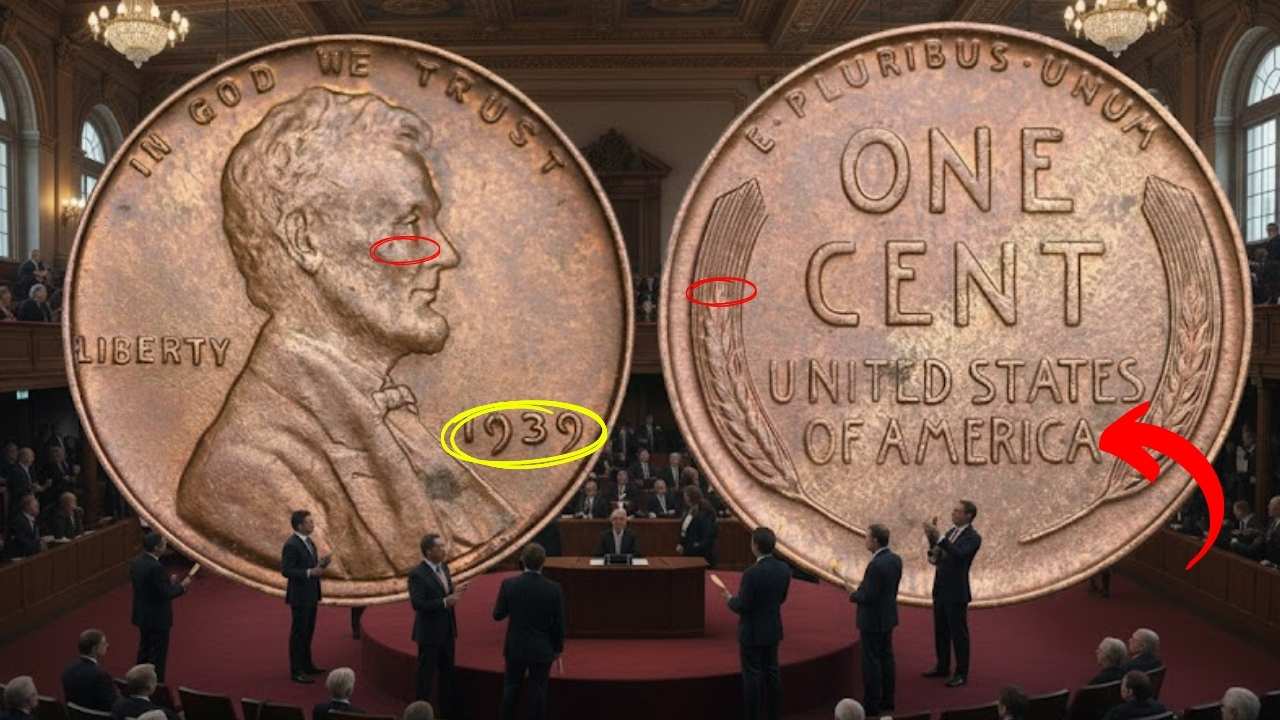
Wheat Penny Price Guide: Wheat pennies, also called Lincoln cents, were first issued in 1909 to honor the 100th birthday of President Abraham Lincoln. For nearly fifty years, these coins showcased Lincoln on the obverse and two wheat stalks on the reverse, creating one of the most recognizable designs in U.S. coinage. While many were minted for circulation, certain dates and variations are extremely rare and highly prized by collectors today. Understanding their value requires attention to mint years, mintmarks, condition, and evolving market trends.
Key Wheat Penny Values and Collector Insights
| Year | Mintmark | Notable Feature | Estimated Value Range |
|---|---|---|---|
| 1909-S VDB | S | First Lincoln cent with designer initials | $1,000–$250,000+ |
| 1914-D | D | Low mintage Denver issue | $500–$20,000+ |
| 1922 Plain | None | Missing mintmark variant | $1,500–$20,000+ |
| 1931-S | S | Scarce San Francisco coin | $150–$1,500+ |
| 1955 Doubled Die | P | Major obverse doubling error | $1,000–$50,000+ |
These details highlight the most sought-after coins among collectors. Factors like mintmarks, rarity, and condition greatly influence value, making certain wheat pennies highly collectible and investment-worthy.
History and Importance of Wheat Pennies
Designed by Victor David Brenner, the Lincoln cent debuted during the centennial of Lincoln’s birth. The reverse wheat stalks symbolized prosperity, making the design visually distinctive compared to contemporary coins. While the majority circulated widely, limited mintage years and unique variations created enduring collector interest. Key dates such as the 1909-S VDB and 1914-D are considered cornerstone coins in any collection.
Mintmarks and Key Dates
Mintmarks indicate the facility where a coin was struck: Philadelphia (P), Denver (D), or San Francisco (S). Rare mintmarks or low production numbers drive collector demand. For example, the 1909-S VDB has one of the lowest mintages, making it highly valuable. Other notable coins include the 1922 Plain and 1931-S. Variations like the 1955 doubled die penny are prized due to striking errors that produced distinct doubling effects.
Condition, Grading, and Value
A wheat penny’s condition is critical for valuation. Coins are graded from Poor (P-1) to Mint State (MS-70). Sharpness of Lincoln’s portrait, clarity of wheat stalks, and overall wear determine the grade. Even common dates can fetch premium prices if preserved well. Conversely, rare coins in poor condition are worth significantly less. Professional grading and encapsulation often increase market value and buyer confidence.
Market Trends and Investment Potential
Wheat pennies have maintained strong collector interest over decades. Rare dates and high-grade coins typically appreciate faster than common issues. Coins professionally certified by recognized organizations generally sell at higher prices. Market demand fluctuates based on rarity, historical significance, and collector enthusiasm, making wheat pennies both a rewarding hobby and potential investment.
Common Mistakes to Avoid
Collectors sometimes overlook mintmarks or subtle variations, mistakenly assuming all coins from a year hold equal value. Improper cleaning can also reduce value by removing natural patina or causing scratches. Purchasing from unverified sellers carries risk, so professional authentication is recommended for significant investments.
Key Highlights
• Wheat pennies were minted from 1909 to 1958 featuring Lincoln and wheat stalks
• Key dates include 1909-S VDB, 1914-D, 1922 Plain, and 1955 doubled die
• Mintmarks (P, D, S) heavily influence rarity and value
• Condition and grading play a crucial role in determining market price
• These coins hold historical significance and investment potential
Final Verdict
Wheat pennies are more than everyday coins; they represent a piece of American history and a potential treasure for collectors. From early 1909 VDB pennies to the final 1958 issues, their value varies with mintmark, rarity, and condition. Understanding key dates, evaluating quality, and following market trends are essential for collectors at all levels. Properly preserved wheat pennies can provide both enjoyment and financial reward.
Disclaimer
This article is intended for educational and informational purposes only. Coin values fluctuate based on market conditions, grading, and collector demand. For accurate valuation, authentication, or investment guidance, consult a professional coin dealer or certified grading service before buying, selling, or appraising wheat pennies.