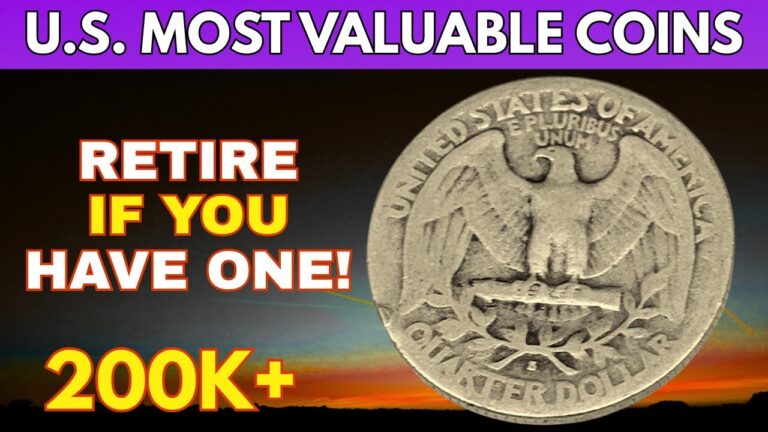
$20,000+ Washington Quarters
Most people spend Washington quarters every day without realizing some of them are secretly hunted by collectors—and a few have already changed lives.
These five quarters look ordinary. But one tiny detail separates pocket change from coins collectors fight over.
Don’t blink—because the biggest mistake people make is missing the detail they already own. 
 Step 1: 1966 Washington Quarter – The Hidden Condition Rarity
The 1966 Washington quarter was not born in a normal year. It was struck during a national coinage emergency when silver coins disappeared and the U.S. Mint rushed to keep the economy running.
Why This Quarter Matters
- Mint marks were removed to prevent hoarding
- Coins were mass-produced at extreme speed
- Most were damaged before collectors could save them
Collectors chase perfect survivors, not average coins. Under magnification, most examples fail due to dull luster, weak strikes, or bag marks.
 A top-grade PCGS MS68 example sold for over $20,000, proving condition rarity can turn a clad quarter into a five-figure trophy.
 Step 2: 1965 Washington Quarter – The Silver Transition Survivor
The 1965 quarter replaced silver coins during a historic monetary shift. The mint rushed production using new clad metals, sacrificing quality for speed.
What Makes It Valuable
- Experimental clad bonding methods
- Weak strikes and surface flaws common
- High-grade survivors are extremely rare
Collectors compete fiercely for pristine examples.
 A top-certified MS68 coin sold for over $15,000, showing how transitional coins can become elite collectibles.
 Step 3: 1985-P Washington Quarter – The Modern Rarity Nobody Saved
Most people think modern coins can’t be valuable. That belief destroyed future treasures.
The 1985-P quarter was produced in massive numbers, handled roughly, and rarely saved in mint condition.
Why Collectors Want It
- Weak strikes and dull luster are common
- Almost no untouched examples survived
- Registry collectors chase perfect survivors
 A PCGS MS68 example sold for over $2,400, proving modern pocket change can become a serious asset.
 Step 4: 1967 Washington Quarter – The Grading Lesson Coin
The 1967 quarter came from the final no-mint-mark era, when the mint rushed coins into circulation.
Key Collector Insights
- Condition matters more than mintage
- Professional grading separates value from hype
- Certified coins sell globally with confidence
A top MS68 graded example sold for over $6,000, proving grading can transform ordinary change into a four-figure collectible.
 Step 5: 1977 Washington Quarter – The Survival Champion
The 1977 quarter punishes assumptions. Millions were struck, but almost none survived untouched.
Why Elite Collectors Chase It
- Weak hair and feather details common
- Heavy bag marks from mint storage
- True high-grade examples are accidental survivors
 A top MS68 certified coin sold for over $10,500, showing survival can be more powerful than age.
 Collector Market Outlook: When Condition Creates Wealth
These Washington quarters prove a powerful truth:
 Survival matters more than mintage, and condition matters more than age.
Coins that were never meant to be saved often become the rarest decades later.
If you own quarters with sharp strike, blazing luster, and clean surfaces, they may be worth far more than face value.
Always consider professional grading—because in the coin market, certification turns hope into verified value.