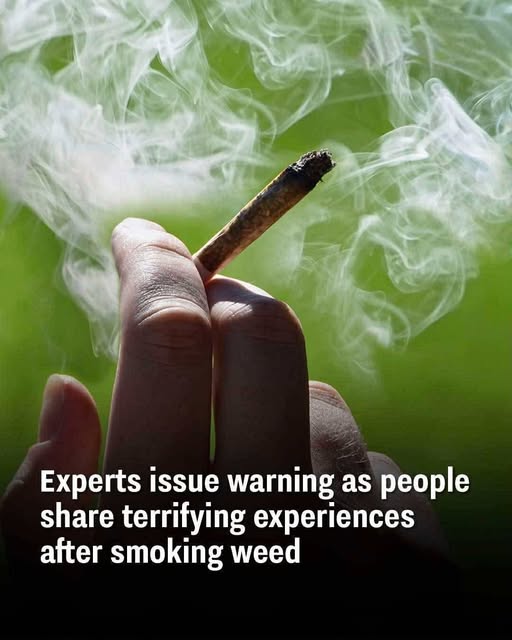
The consumption of cannabis has increased worldwide in recent years due to greater social acceptance, legalization, and the perception that it is relatively harmless.
A new study, however, sheds light on the effects cannabis can have on brain activity.
The topic has gained renewed attention after President Donald Trump moved cannabis from Schedule I to Schedule III to ease restrictions on medical research, a decision that has also revived debate over the drug’s potential long-term health risks.
“Because a lot of people want to see it, the reclassification, because it leads to tremendous amounts of research that can’t be done unless you reclassify,” Trump said, per ABC. “So we are looking at that very strongly.”
This certainly doesn’t mean that cannabis comes with no risk.
The research published in JAMA Network Open examines the link between cannabis consumption and the effects on brain activity. Researchers analyzed 1000 young adults aged 22 to 36 with cannabis use disorder using brain imaging technology. The research revealed that both those who used cannabis for an extended period of time and recent users showed reduced brain activity during a working memory task.

Working memory is person’s ability to work with information and is linked to a range of cognitive activities, from reasoning tasks to verbal comprehension to mathematical skills.
Joshua Gowin, PhD, the study’s first author, stated, “As cannabis use continues to grow globally, studying its effects on human health has become increasingly important. By doing so, we can provide a well-rounded understanding of both the benefits and risks of cannabis use, empowering people to make informed decisions and fully comprehend the potential consequences.”
Use of cannabis has negative effects on the communication between key brain networks, including those involved in daydreaming, decision-making, focus, memory, and managing emotions.
“We applied the highest standards to our research, setting rigorous thresholds for statistical significance across all seven cognitive function tests. To minimize the risk of false positives, we employed false discovery rate (FDR) correction. While some of the other tasks indicated potential cognitive impairment, only the working memory task showed a statistically significant impact,” Gowin added.

Most cannabis users believe that CBD (cannabidiol)—a compound in cannabis that doesn’t cause a high—reduces the negative effects of THC (the compound that makes people feel high). However, the study suggests this not to be the case. On the contrary, it sometimes increases the effects.
Dr Daniel Myran, a researcher with the Ottawa Hospital Research Institute and a family physician, spoke of the risk of psychosis at people who smoke weed.
“I think that people remain unaware of this connection between cannabis use and potential risk of chronic psychotic disorders,” he said per CBC. He also warned that men aged 14 to 24 also have the risk of ‘developing schizophrenia’ of over ‘40 per cent within three years’ if they visit the ER for cannabis-induced psychosis.
Dr. Myran has studied the link between cannabis and psychosis and co-authored research in 2023 showing a 220% increase in Ontario emergency room visits tied to cannabis-induced psychosis between 2014 and 2021. He also led a study that found about 27.5% of people who went to the ER for cannabis use later developed an anxiety disorder within three years.
One possible reason is the much higher THC levels in modern cannabis compared with naturally occurring plants. People with existing genetic or mental health vulnerabilities may be more at risk, with regular use, or even a first experience, potentially triggering psychosis.
Please SHARE this article with your family and friends on