Rare coin collection with magnifying glass
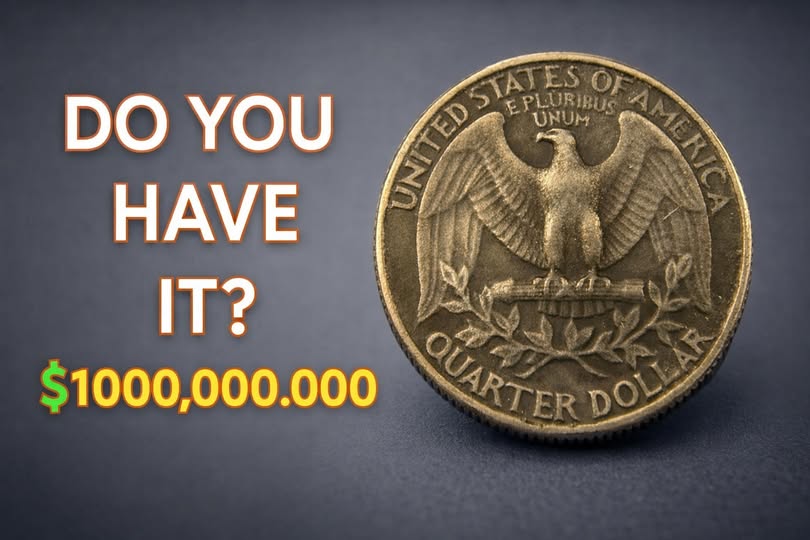
Imagine reaching into your pocket, pulling out an ordinary-looking quarter, and discovering it’s worth more than a luxury house-or even more than gold by weight. It sounds impossible, but it has happened more times than most people realize.
Across the United States, rare quarters have sold for hundreds of thousands to over one million dollars, shocking collectors and everyday people alike. These coins were once treated as pocket change, spent on vending machines or parking meters, before someone noticed a rare detail that changed everything.
Key Insight
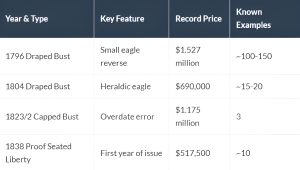
The most valuable quarter ever sold at auction fetched $1.527 million in 2013. This 1796 Draped Bust Quarter, with a small eagle reverse, is one of only a few hundred known to exist.
In this comprehensive guide, you’ll uncover the truth behind million-dollar quarters, why collectors are willing to pay staggering prices, which specific quarters are the most valuable, and how you can check your own coins before accidentally spending a small fortune.
What Is a “Million Dollar Quarter”?
A “Million Dollar Quarter” is not a special coin officially labeled by the U.S. Mint. Instead, it’s a term used by collectors to describe extremely rare quarters that sell for extraordinary prices due to several key factors:
Extreme Rarity – Limited mintage numbers or survival rates
Minting Errors – Production mistakes that create unique variants
Historical Importance – Connection to significant periods in U.S. history
Exceptional Condition – Minimal wear with original luster preserved
High Collector Demand – Competing interest from serious numismatists
These quarters often look normal at first glance, which is why many of them went unnoticed for years in circulation. The difference between an ordinary quarter and a million-dollar one can be as subtle as a slightly doubled letter or a missing mint mark.
Historical Context
The first U.S. quarter was minted in 1796, just three years after the Philadelphia Mint began operations. Only 6,146 were produced that year, and surviving specimens in excellent condition are among the most coveted coins in American numismatics.
Why Are Some Quarters Worth More Than Gold?
Gold has always symbolized wealth, but rare coins can surpass gold’s value dramatically. A single quarter weighs about 5.67 grams-worth only a few dollars in gold value. Yet certain quarters sell for hundreds of thousands or millions because rarity beats raw material every time.
Value Comparison
$1,527,000
1796 Draped Bust Quarter (auction price)
VS.
$363
Equivalent weight in gold (5.67g at current prices)
The Four Pillars of Numismatic Value
Here’s why collectors pay astonishing amounts for certain quarters:
1. Extreme Rarity
Some quarters exist in only a handful of known examples. When supply is nearly zero and demand is global among wealthy collectors, prices explode. The 1823/2 Capped Bust Quarter, for example, has only three confirmed specimens.
2. Minting Errors
Errors happen when something goes wrong during production-double strikes, missing details, off-center designs, or planchet flaws. The more dramatic and rare the error, the higher the value. Error coins are essentially “one-of-a-kind” artifacts of the minting process.
3. Historical Significance
Early U.S. quarters or coins tied to important historical periods carry emotional and cultural value, not just monetary worth. Coins from the first year of a new design or series often command substantial premiums.
4. Condition (Grade)
A flawless quarter preserved for decades can be worth exponentially more than the same coin with scratches or wear. Professional grading services (like PCGS or NGC) assign numerical grades from 1-70, with coins graded MS-65 or higher often selling for 100x the value of lower-grade examples.
The Most Valuable Quarters Ever Discovered
Early U.S. Quarters (1796-1838)
Some of the first quarters minted in the United States are among the most valuable coins ever sold. These were produced in extremely small numbers and often hand-finished by mint workers.
Rare Washington Quarters
Washington quarters minted since 1932 have produced several remarkable rarities, especially among proof coins and error varieties.
1932-D Washington Quarter – Low mintage (436,800) makes it the key date of the series. MS-65 examples have sold for over $30,000.
1932-S Washington Quarter – Only 408,000 minted, with high-grade examples exceeding $25,000.
1950-D/S Overmintmark – AD mintmark punched over an S. Discovered in the 1980s, this error coin has sold for over $15,000.
Modern Treasures
Even recently minted quarters can be valuable. A 1970-S Washington Quarter struck on a 1941 Canadian quarter planchet (wrong metal error) sold for $35,000 in 2019.
These errors typically occur when a foreign planchet gets mixed into production.
State Quarters With Extraordinary Errors
The U.S. State Quarters program (1999-2008) produced billions of coins, but hidden among them are rare error coins that collectors obsess over:
Double Die Errors – Most common on Wisconsin 2004-D Extra Leaf quarters, which can sell for $1,000+
Missing Mint Marks – 1999-P Delaware Spitting Horse quarters without the P mintmark
Misaligned Designs – Off-center strikes showing partial designs
Mule Errors – Quarter obverse paired with a different coin’s reverse (extremely rare)
Mint Marks: Small Letters, Huge Value
Mint marks are tiny letters on quarters indicating where they were made.
Understanding these can mean the difference between a 25-cent coin and a valuable collectible:
P-Philadelphia (no mint mark before 1980)
D– Denver
S – San Francisco (usually proof or special mint sets)
W-West Point (special issues after 2012)
A missing or incorrect mint mark can turn an ordinary quarter into a major collectible. For example, some 1982 and 1983 Washington quarters were accidentally struck without mint marks. These error coins can be worth $100-$200 even in circulated condition.
Expert Tip
Always examine mint marks under 5-10x magnification. Some coins have “filled” mint marks from grease in the dies, which can look like missing mint marks but are less valuable. True missing mint marks show a perfectly smooth surface where the letter should be.
How to Check If Your Quarter Is Valuable
Before you spend another quarter, follow this systematic approach to identify potential treasures:
Step 1: Check the Year
Some years are more valuable than others. Research key dates like 1932-D, 1932-S, and 1950-D/S overmintmark. Also check for the first and last years of any series (like 1976 Bicentennial quarters).
Step 2: Look for Mint Marks
Use a magnifying glass and check for missing, doubled, or unusual mint marks. Pay special attention to quarters from 1965-1967, which shouldn’t have mint marks but occasionally do (transitional errors).
Step 3: Inspect for Errors
Compare your coin to online reference images. Look closely at letters, faces, and edges for doubling, missing details, or misalignments. Common error locations include the date, “IN GOD WE TRUST,” and the eagle on the reverse.
Step 4: Assess Condition
Coins with minimal wear are far more valuable. Look for full details in hair strands, feather lines, and lettering. Original luster (the way light reflects off the surface) significantly increases value.
Step 5: Get Professional Help
If something looks unusual, consider having your coin evaluated by a professional grading service like PCGS or NGC. For a fee, they will authenticate, grade, and encapsulate your coin in a tamper-evident holder.
▲ Common Mistakes to Avoid
Never clean coins – Cleaning removes the natural patina and can cause microscopic scratches, reducing value by 50% or more
Don’t ignore modern coins – Error coins are still being produced today
Avoid selling without research – Many valuable coins have been sold for face value by uninformed owners
Don’t store coins improperly – PVC holders can damage coins over time; use
Real Stories: Ordinary People, Extraordinary Coins
Many million-dollar quarters were discovered by accident-in old jars, inherited collections, or everyday change. Consider these remarkable finds:
A Massachusetts man found a 1913 Liberty Head Nickel (not a quarter, but similar principle) in his pocket change in 1962. It sold for $3 million in 2010.
A 1970-S Washington Quarter struck on a 1941 Canadian quarter planchet was discovered in a regular bank roll in 2017. It later sold for $35,000.
The famous “Spitting Horse” Delaware quarter errors were first discovered by a sharp-eyed collector going through rolls from his local bank.
In each case, people spent years unknowingly holding coins worth life-changing money. The difference between spending and saving came down to curiosity and attention to detail.
Why These Quarters Are Still in Circulation
You might wonder why such valuable coins haven’t already been found. Several factors explain this:
Billions of quarters exist – With over 50 billion quarters minted since 1965 alone, searching them all is impossible
Errors are often subtle – Many errors require magnification to identify
Many people don’t check their coins – Most handle change without a second glance
Rare coins can circulate for decades unnoticed – Some valuable errors weren’t discovered until years after minting
This is why collectors continue searching-and why you should too. Every roll of quarters from the bank represents a potential treasure hunt.
Investment Perspective
While finding a million-dollar quarter is exceptionally rare, even coins worth $100-$5,000 are discovered regularly. The most successful coin hunters develop systematic approaches: focusing on key dates, learning to identify errors, and examining every coin carefully. Time invested in education consistently yields the highest returns in numismatics.
Final Thoughts: Check Your Change Carefully
Million-dollar quarters are proof that wealth can hide in plain sight. What looks like ordinary pocket change could be a collector’s dream, representing a unique piece of American history or a minting anomaly that will never be exactly repeated.
The world of rare coins combines history, art, science, and treasure hunting in a way few other hobbies can match. Whether you’re a serious collector or simply curious about what’s in your pocket, developing an eye for detail can turn spare change into an engaging pursuit-and potentially, a life-changing discovery.
Before you drop that next quarter into a vending machine, take a moment to examine it. Study the year. Check the mint mark. Inspect the details. That simple habit, multiplied over time, could reveal hidden value where you least expect it.
For more detailed coin valuation resources, consult the Professional Coin Grading Service (PCGS) or Numismatic Guaranty Corporation (NGC) price guides, which are updated regularly based on auction results and market trends.
For more detailed coin valuation resources, consult the Professional Coin Grading Service (PCGS) or Numismatic Guaranty Corporation (NGC) price guides, which are updated regularly based on auction results and market trends.